

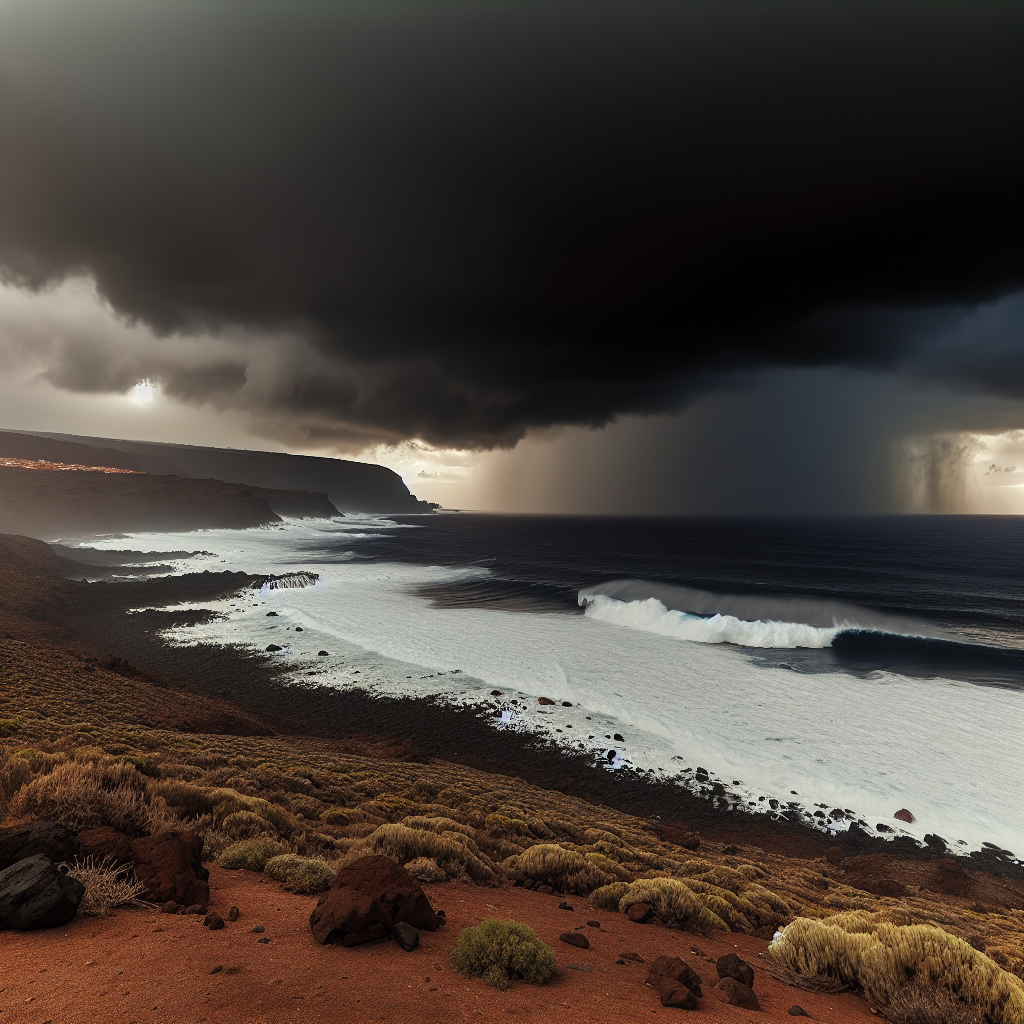
Stormy Weather Ahead for the Canary Islands: What You Need to Know
The weather in the Canary Islands is taking a turn, with strong winds and thunderstorms on the horizon. For those planning a beach day in Tenerife, it’s crucial to understand what a red flag signifies and whether swimming is advisable.
Heikki Sinisalo, a meteorologist at the Finnish Meteorological Institute, shared insights with Iltalehti, stating that the latter half of this week is expected to bring more unstable weather conditions to Tenerife.
“Since Thursday, we’ve been monitoring warnings for heavy rainfall in the region, along with a potential for thunderstorms, which might be widespread and intense,” Sinisalo explained. “We could see wind gusts exceeding 20 meters per second, with some reaching over 25 meters. The thunderstorms may deliver rain at rates of up to 20 millimeters per hour, accumulating to as much as 100 millimeters in a single day.”
While there are currently no specific warnings regarding wave heights for the Canary Islands, Sinisalo noted that the impending thunderstorm fronts could exacerbate wave conditions.
Tragedy Strikes in Tenerife
In light of recent events, Iltalehti reported a tragic weekend in Tenerife, a popular destination for Finnish travelers, where three separate wave incidents led to fatalities. A total of fifteen individuals sustained various injuries.
Hannu Valta, another meteorologist consulted by Iltalehti, clarified that the exceptional wave conditions were not driven by the storm itself, as winds were measured at a relatively calm 5 to 10 meters per second, with waves in the 3 to 4-meter range. “In situations like this, a single rogue wave can sometimes form, catching beachgoers off-guard due to the coastal topography,” Valta remarked.
Stock photo: People enjoying the piers of Puerto de la Cruz. AOP/Alamy
A Call for Caution
Authorities have issued a strong advisory for residents and tourists alike to tread carefully along the coast. The Canarian Weekly has relayed the following guidance:
-
Stay Vigilant: Pay attention to red flags and steer clear of swimming, surfing, or any activities in the water, particularly at beaches susceptible to north or west winds.
-
Avoid Risky Areas: Keep away from breakwaters, boardwalks, and rocky coastlines, as large waves can unexpectedly emerge and pose a danger.
-
Fishing Precautions: Do not fish from rocks or piers, and avoid close proximity to the shoreline.
-
Secure Vessels: Ensure small boats and watercraft are safely moored and avoid sailing unless it’s absolutely necessary.
-
Travel Safely: Avoid parking near low-lying coastal roads that might flood during high tide.
-
Stay Informed: Follow updates from official sources, including the Canary Islands government, AEMET, and local municipalities. Adhere to any beach closures or safety warnings issued by emergency services.
While the current alerts are precautionary rather than indicative of a full-blown emergency, officials caution that hazardous situations can develop rapidly, particularly in areas known for strong currents and erratic wave patterns.
Tourists are encouraged to remain vigilant and check local advisories before venturing out to the beaches, harbors, or waterside attractions. Your safety should always be the top priority.