

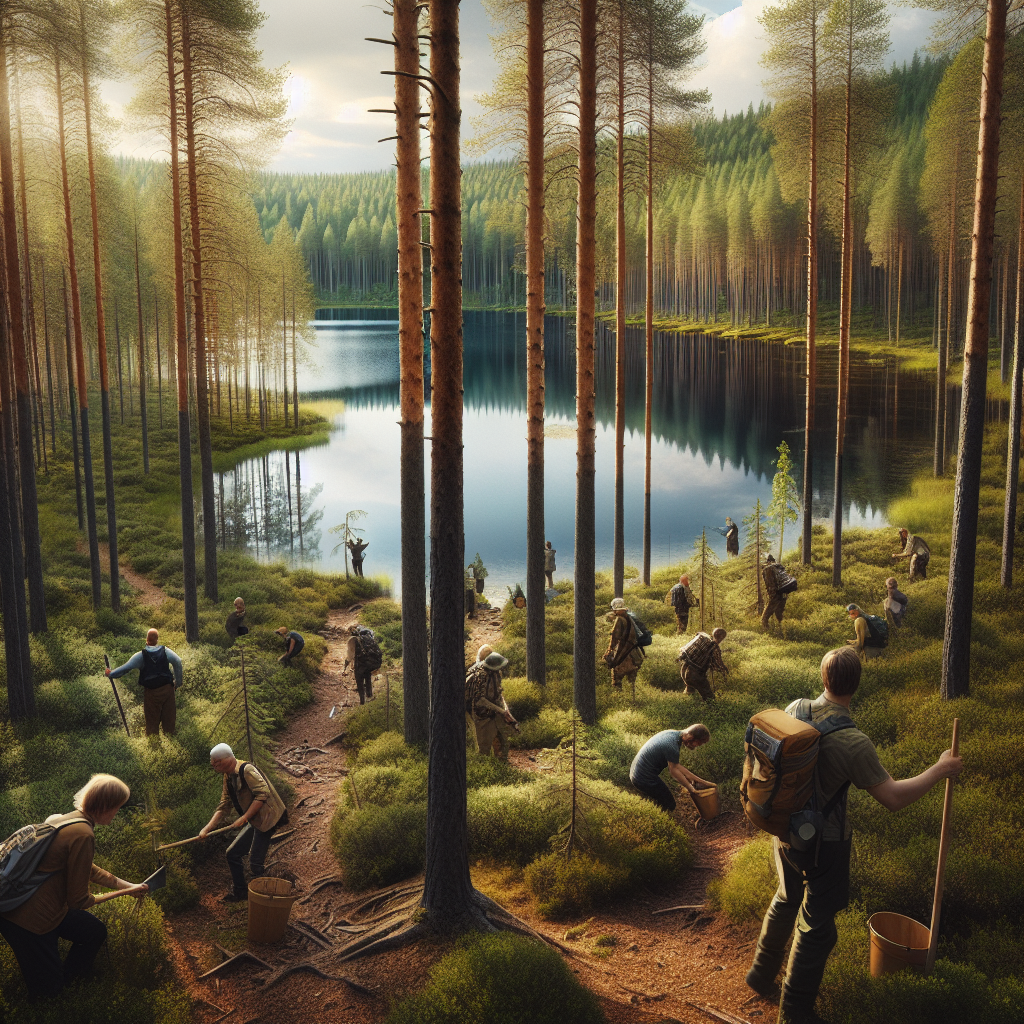
Regenerative tourism seeks to leave a positive footprint on the communities it touches. So, would you consider trading a portion of your vacation for some volunteer work? For Tiina Polo, the answer is a resounding yes.
“Our family enjoys being active,” shares Polo. “The idea of safeguarding nature while also getting some exercise is a wonderful combination.”
In February 2025, Polo and her family joined a small group on the picturesque shores of Lake Saimaa, where they set to work creating artificial snowdrifts. Their mission? To support the endangered Saimaa ringed seal, a unique species that calls Finland home.
These seals depend on deep snowbanks to create their breeding lairs. Unfortunately, during milder winters, natural snowfall can fall short, leading to dire consequences for seal pups.
Volunteers creating snowdrifts for Saimaa ringed seals, providing essential breeding sites.Photo: Jarno Artika/Karelia Cottages
With shovels in hand, volunteers meticulously pile snow into designated spots. These efforts have already helped numerous pups survive winters that would otherwise leave them vulnerable.
See how it’s done: Watch volunteers assemble snowdrifts for the Saimaa ringed seals.Video: Jarno Artika/Karelia Cottages
Building on this successful initiative, Karelia Cottages, a small family-run business in eastern Finland, has sought to transform this vital work into an engaging travel experience. Their innovative concept involves offering seal-themed winter weekends, where guests can participate in building snowdrifts while learning about the seals’ fragile ecosystem.
However, in 2025, challenging weather conditions permitted only one of the planned weekends to take place—the one attended by Polo and her family. Katri Vuorjoki, the managing director of Karelia Cottages, has expressed her intent to continue these seal weekends in the years to come.
From Sustainability to Regeneration
After considerable effort, the snowbank reaches a significant height on the measuring stick.Photo: Jarno Artika/Karelia Cottages
The seal weekends serve as a prime example of a burgeoning trend in the travel industry known as regenerative tourism.
While sustainable tourism often focuses on minimizing negative impacts, regenerative tourism aims to create a net positive effect on local communities, cultures, and ecosystems. Though definitions vary, this approach frequently involves tourists engaging in hands-on activities, such as planting trees, removing invasive species, or assisting local communities.
Similar movements are emerging globally—from reef restoration efforts in Indonesia to rewilding holidays in Scotland.
“The travel industry in Finland has faced numerous hurdles, but regenerative tourism presents exciting new possibilities,” remarks Elli Vento, a postdoctoral researcher at the University of Eastern Finland. She is a part of a project led by the Natural Resources Institute Finland, which aims to foster regenerative tourism by establishing networks and cultivating new thematic travel experiences.
Saimaa, Finland’s largest lake, sprawls over 4,400 square kilometers (1,700 square miles), offering a stunning array of islands and inlets in eastern Finland.Photo: Jarno Artika/Karelia Cottages
With Finland’s pristine landscapes as a key attraction for visitors, Vento identifies significant regenerative tourism potential in nature-based experiences, which may also incorporate elements of local heritage. Examples include the popular “Shepherd for a Week” holidays and a “cow camp” experience offered by a farm in eastern Finland.
While she believes regenerative tourism may not appeal to mass-market travelers, it could attract those in search of a more meaningful vacation. The challenge lies in crafting appealing travel products and effectively reaching potential customers.
Ideas for Every Season
Taking a moment for a lakeside picnic during the outing.Photo: Jarno Artika/Karelia Cottages
Looking ahead, Karelia Cottages is expanding its vision beyond the winter months. While the seal weekends may be confined to a brief period in midwinter, the company is exploring new activities that align with this mission throughout the year.
“We’re currently working on creating a map of nearby birdhouses,” Vuorjoki explains. “Visitors can help clean the birdhouses before the migratory birds return. They’ll also have the opportunity to construct new birdhouses to hang along a nature trail.”
In this way, tourism can transcend mere observation, empowering travelers to become active stewards of the environment.
By Juha Mäkinen, February 2026