


Summary
- Lahti, Finland exemplifies a remarkable transformation from a bustling industrial city to a beacon of sustainability, aiming for carbon neutrality by 2025.
- Aspen, Colorado, is powered entirely by renewable energy and promotes eco-friendly travel options through free public transportation and bike-sharing programs, all set against a backdrop of stunning natural beauty.
- Kamaishi, Japan, has garnered acclaim for its renewable energy and waste reduction strategies and boasts the longest eco-tourism trail in Japan, winding along its picturesque coastline.
Residents of small towns and rural communities deserve the same clean and healthy environments as their urban counterparts. Encouragingly, several small towns are emerging as vibrant examples of sustainable initiatives.
These smaller locales may not always have the financial might or institutional frameworks of larger cities, but their agility often allows them to implement meaningful changes swiftly, sometimes driven by a single dedicated leader.
Interestingly, some of these towns can leverage external resources to launch sustainability initiatives that measure up to those of their larger city cousins. Here are ten small towns committed to advancing sustainability.
1
Lahti, Finland – A Blueprint for Sustainable Town Planning
One might envision an eco-friendly city adorned with vertical gardens, high-tech public transport, and solar-paneled sidewalks. However, Lahti (pronounced “Lachti”) presents a different picture—one of simplicity, with its uniform apartment buildings, expansive streets, and a cycling-friendly atmosphere.
This city’s evolution from a traditional industrial town to a modern green hub has become a remarkable European success story. In 2021, Lahti earned the title of European Green Capital, a testament to its commitment to sustainability.
With sustainable initiatives woven into its town planning, Lahti features energy-efficient homes, schools powered entirely by renewable sources, and a groundbreaking groundwater system that supplies UNESCO-certified drinking water. The town has ambitious plans to achieve carbon neutrality by 2025.
From the warmth of traditional Finnish saunas to opportunities for urban skiing, cycling, and skiing championships, Lahti entices eco-conscious travelers with its diverse outdoor offerings.
Visiting Lahti
- Population: 120,000
- Best Time to Visit: June – July
- Recommended Stay: 2 days
- Attractions: Guided tours of Sustainable Lahti, New Harbor Area, Wood Architecture Park, Teerenpeli Whisky Distillery, Lake Päijänne.
2
Aspen, Colorado, USA – Powered by Renewable Energy

Born from its silver mining roots in the 19th century, Aspen has evolved into a premier destination for outdoor enthusiasts. Since the 1940s, the city has focused on innovative solutions to navigate environmental challenges, becoming one of only six cities in the United States to run entirely on renewable energy.
Major ski resorts in Aspen operate on energy sourced from transforming waste methane from coal plants. The city promotes sustainable travel through free bus and electric shuttle services, and bike-share options are available for the first 30 minutes at no cost, encouraging eco-friendly transportation.
Nature lovers will find plenty to adore in Aspen, located near the White River National Forest, with a variety of summer and winter activities, including hiking, biking, cross-country skiing, snowboarding, and ice skating.
Visiting Aspen
- Population: 6,800
- Best Time to Visit: December – February (Peak Season)
- Recommended Stay: 4–5 days
- Attractions: Maroon Bells, Maroon Lake Scenic Trail, John Denver Sanctuary, Aspen Mountain.
3
Kamaishi, Japan – Renewable Energy and Waste Reduction Efforts

Having faced devastation from the tsunami and earthquake of 2011, Kamaishi has risen from the ruins with a commitment to sustainable tourism. Nestled in Iwate Prefecture, this town boasts a stunning coastline and is entirely enveloped by the Sanriku Fukko National Park, featuring pristine landscapes and habitats for rare seabirds and large wildlife.
Honored as one of the Top 100 Sustainable Travel Destinations for five years running since 2018, Kamaishi’s emphasis on renewable energy and waste management strategies has gained widespread recognition.
Visitors can explore the Michinoku Shiokaze Trail, the longest coastal trail in Japan, which showcases breathtaking scenery, opportunities for interaction with local residents, and insights into a lifestyle harmonious with nature and culture.
Visiting Kamaishi
- Population: 32,500
- Best Time to Visit: December – February
- Recommended Stay: 2 days
- Attractions: Sanriku Fukko National Park, Mount Goyo Hiking Trail, Michinoku Shiokaze Trail.
4
San Luis Obispo, California, USA – A Car-Free Initiative to Curb Carbon Emissions
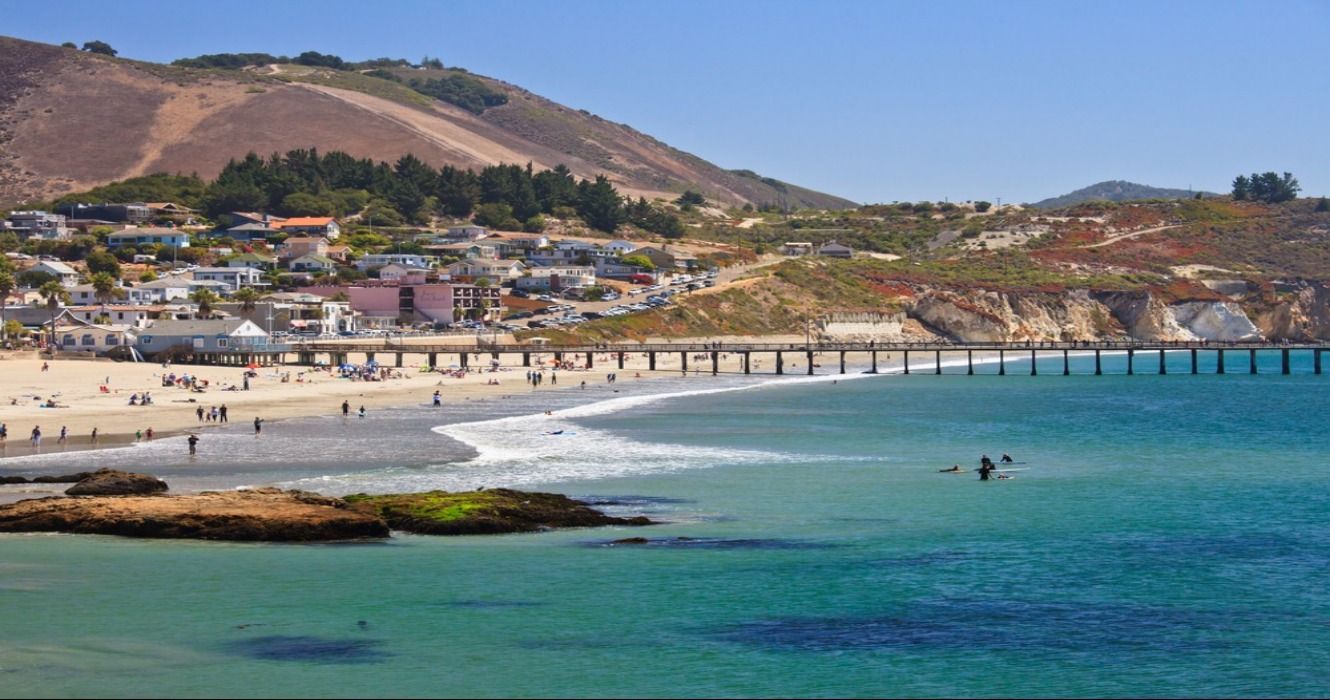
San Luis Obispo, California, stands out as the first city globally to ban smoking, eliminate drive-through restaurants, and run its movie theater on solar energy—all part of the town’s ambitious sustainability agenda. Its goal? Achieving carbon neutrality by 2035.
In its green initiatives, the town incentivizes hotels to plant trees, distributes compost to residents, and offers discounts for Amtrak travelers. The SLO Car Free program aims to have half of all local trips completed outside private vehicles by 2035.
With panoramic views, clean air, and a focus on environmental conservation, visitors and local residents alike can enjoy pristine beaches and lush trails that invite eco-friendly activities.
Visiting San Luis Obispo
- Population: 48,000
- Best Time to Visit: March – November
- Recommended Stay: 2–3 days
- Attractions: Firestone-Walker Brewery, Palm Theatre, Tablas Creek Vineyard & Winery, The Place on PCH, SLO CAL Antique Trail, Avila Beach.
5
Puqueldón, Chile – Preserving Architectural Heritage

Located on the picturesque island of Chiloé in southern Chile, Puqueldón has gained fame as a sustainable tourism destination. Its commitment to safeguarding local culture, environmental protection, and community development is at the forefront of its mission.
With a rich architectural heritage, the town prioritizes the preservation of its traditional wooden houses and public structures made with local materials. Surrounding natural beauty—including forests, wetlands, and rivers—invites a host of eco-tourism activities like hiking, birdwatching, and kayaking.
Moreover, the town champions local businesses, encouraging visitors to engage with artisans, savor locally-sourced cuisine, and support community members.
Visiting Puqueldón
- Population: 4,000
- Best Time to Visit: December – February (Peak season); June – August (for budget-conscious travelers)
- Recommended Stay: 2 days
- Attractions: Mirador La Voladora, Parque Punta Lima – Isla Lemuy.
6
Georgetown, Texas, USA – Powered by Renewable Energy

Georgetown, a modest yet often overlooked destination in Texas, has emerged as one of the greenest cities in America. Through a series of innovative energy strategies, Georgetown’s local government has succeeded in establishing itself as a leader in renewable energy.
In 2012, the mayor signed a pivotal 20-year power purchase agreement with a West Texas wind farm. This initiative provided enough energy to power the town entirely. As a result, Georgetown has saved over $30 million in energy costs while showcasing that sustainability can also be economically viable.
Equipped with smart grid technology and a 21-megawatt solar farm, Georgetown exemplifies a serious commitment to clean energy. With numerous parks and trails, visitors to Georgetown can indulge in a variety of eco-friendly activities.
Visiting Georgetown
- Population: 75,500
- Best Time to Visit: May – September
- Recommended Stay: 1–2 days
- Attractions: Inner Space Cavern, San Gabriel Park & Hike and Bike Trails, Blue Hole, Cedar Breaks Park.
7
Kodiak Island, Alaska, USA – Powered by Wind and Hydropower

Home to a large portion of the Kodiak National Wildlife Refuge, Kodiak Island is a haven for eco-tourism, boasting almost 100 percent renewable energy usage.
The island met its renewable energy goals years in advance, obtaining approximately 99.7 percent of its power from a combination of wind and hydropower. This transition from diesel to renewables not only saved residents $22 million but also reduced carbon dioxide emissions by 62 million pounds annually.
Renowned for its Kodiak brown bears, visitors can partake in a range of eco-friendly activities, such as hiking, camping on scenic trails, whale watching, and kayaking along the island’s breathtaking coastline.
Visiting Kodiak Island
- Population: 12,800
- Best Time to Visit: May – September
- Recommended Stay: 2–3 days
- Attractions: Kayaking in Kodiak, Kodiak History Museum, Kodiak National Wildlife Refuge Visitor Center, Fort Abercrombie State Historical Park.
8
Bundanoon, New South Wales, Australia – A Bottle-Free Town

In a groundbreaking move in 2009, Bundanoon, New South Wales, became the first town in the world to ban commercially bottled water.
The Arqua Station initiative was launched to introduce public drinking fountains and refill stations that combat the impact of plastic waste. These innovative hydration solutions effectively address common issues around hygiene, vandalism, and accessibility.
Today, Bundanoon offers free filtered water to the public, eliminating the need for bottled water and significantly reducing plastic waste.
A stone’s throw away lies the Morton National Park, renowned for its dramatic waterfalls, diverse wildlife, and picturesque walking trails. For a night-time experience unlike any other, visitors must witness the ethereal Glow Worm Glen, where hundreds of luminescent larvae create a breathtaking light show.
Visiting Bundanoon
- Population: 2,800
- Best Time to Visit: December – February
- Recommended Stay: 2 days
- Attractions: Morton National Park, Fairy Bower Falls, Mount Carnarvon walking tracks, Bundanoon cycling route.
9
Sayulita, Mexico – A Beach Destination Striving for Sustainability

Sayulita, a vibrant beach town along Mexico’s Pacific coast, is a hub for surfers and ocean lovers. Boasting beautiful beaches and a lively atmosphere, this small town is working hard to become a greener destination.
From safeguarding local reef systems and rehabilitating wildlife through a bird sanctuary to engaging local businesses that promote sustainability, Sayulita is gradually carving a path for eco-conscious tourism. However, while great strides have been made, challenges remain.
Hiking and scuba diving also attract those eager to explore the natural beauty of this coastal gem.
Visiting Sayulita
- Population: 3,400
- Best Time to Visit: November – April (Peak Season), with August offering lush landscapes and fewer crowds.
- Recommended Stay: 4–5 days
- Attractions: Main Beach, Islas Marietas Tour, Surfing, Whale Watching, Jungle Hike, Zip Lining.
10
Lošinj Island, Croatia – Preservation of Local Medicinal Plant Life

Often overshadowed by more famous Croatian tourist spots like Dubrovnik, Lošinj Island presents a unique and serene escape. Known as the “island of vitality” due to its rich variety of plant life, Lošinj is a shining example of sustainable tourism.
As part of the European Union’s Natura 2000 initiative, both the land and sea surrounding Lošinj are protected areas, underscoring the island’s biodiversity. Hiking, cycling, and paddleboarding are popular ways for eco-conscious tourists to explore the island, while its sensory garden showcases hundreds of medicinal plants.
Visiting Lošinj Island
- Population: 7,500
- Best Time to Visit: April – July, September – November
- Recommended Stay: 3–4 days
- Attractions: Forest Park, Lošinj Aromatic Garden, Veli Zal Beach, Hike to Church of Sv. Ivan the Baptist, Dolphin Watching at the Blue World Marine Research and Conservation Center.
There is strictly no touching, swimming, or feeding the dolphins.