

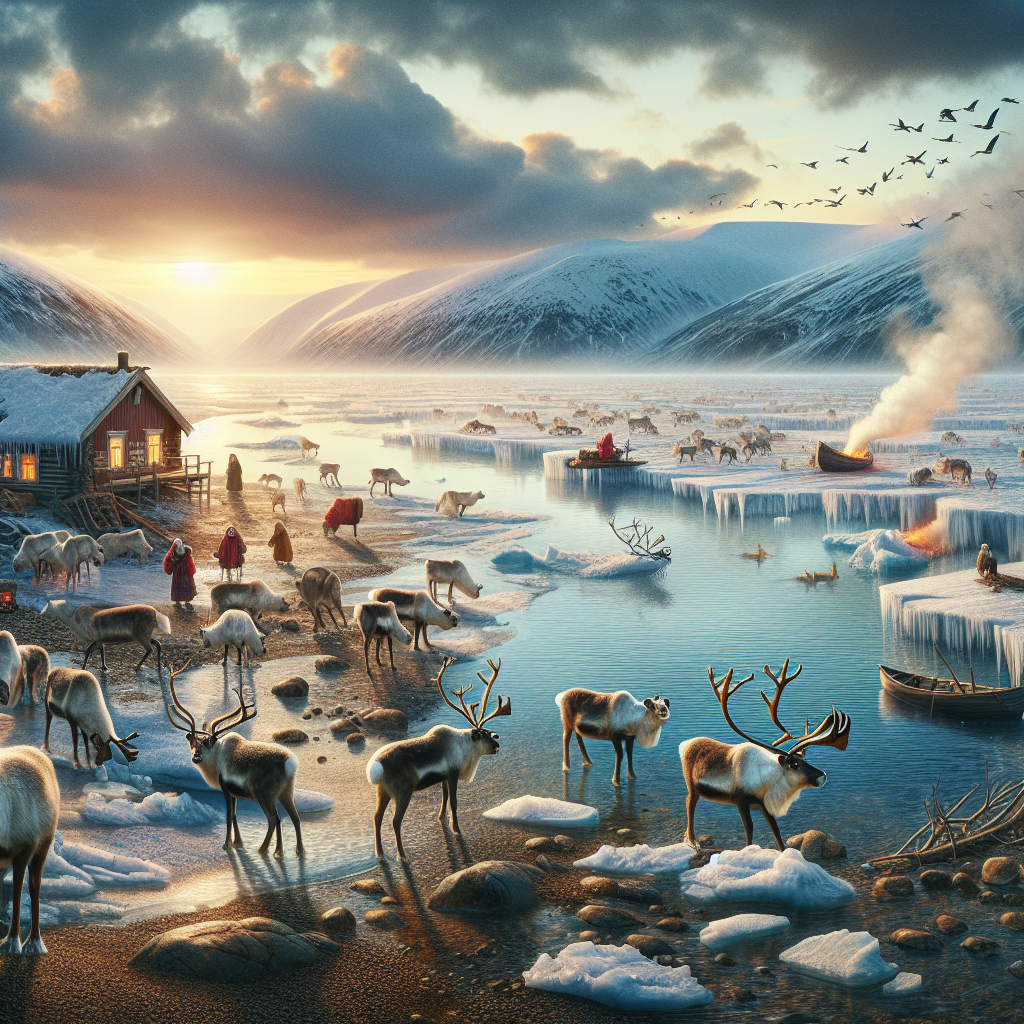
Rising Temperatures Threaten Finnish Lapland’s Ecosystem and Livelihoods
The Finnish Environment Institute (Syke) has issued a stark warning: as temperatures climb over the coming decades, many species in the region face an uncertain future.
In a revealing report, Syke projected that the average annual temperature in Finnish Lapland could rise significantly—by as much as seven degrees Celsius—if the current trajectory of greenhouse gas emissions continues unchecked. This change, which could occur over just 50 years, would dramatically alter the landscape and livelihoods in the area.
Currently, Lapland has already warmed by approximately two degrees since pre-industrial times. As the region progresses toward a projected increase of 2-3 degrees over the next half-century, the implications for both nature and local industries become increasingly troubling. The report suggests that without urgent action, Lapland’s winters will arrive later and become milder, jeopardizing key livelihoods such as reindeer herding, nature tourism, and construction.
“These changes are anticipated to unfold within a single generation,” noted a representative from Syke.
As temperatures rise, the environment will undergo substantial transformation. Natural habitats—including Palsa mires and permafrost—are at risk of vanishing altogether, while expansive areas are likely to become bushy and grassy as the Arctic landscape greens. This shift could endanger numerous northern animal species, with nearly 40% of open-tundra species already classified as endangered.
The challenges facing these species are compounded by the darkening and eutrophication of local waters, along with the encroachment of invasive species such as the fox, pink salmon, and Giant hogweed.
Opportunities for Mitigation Still Exist
However, there is still room for intervention. Syke’s analysis indicates that even if countries meet their Paris Agreement emission reduction targets, temperatures in the region could still rise by an additional 2-3 degrees over the next half-century.
“If greenhouse gas emissions remain unchecked, Lapland could see an alarming increase of almost seven degrees compared to pre-industrial times,” the report warns.
Yet, with stringent global measures in place—including new regulations on energy production, transportation, construction, and food production—this rise could potentially be limited to 3-4 degrees.
This comprehensive analysis was conducted in collaboration with the Finnish Meteorological Institute, Parks & Wildlife Finland, the University of Umeå, and several other Nordic research institutions.
In these turbulent times, the urgency for action is clear. The survival of Lapland’s unique ecosystem and the livelihoods that depend on it hangs in the balance.