

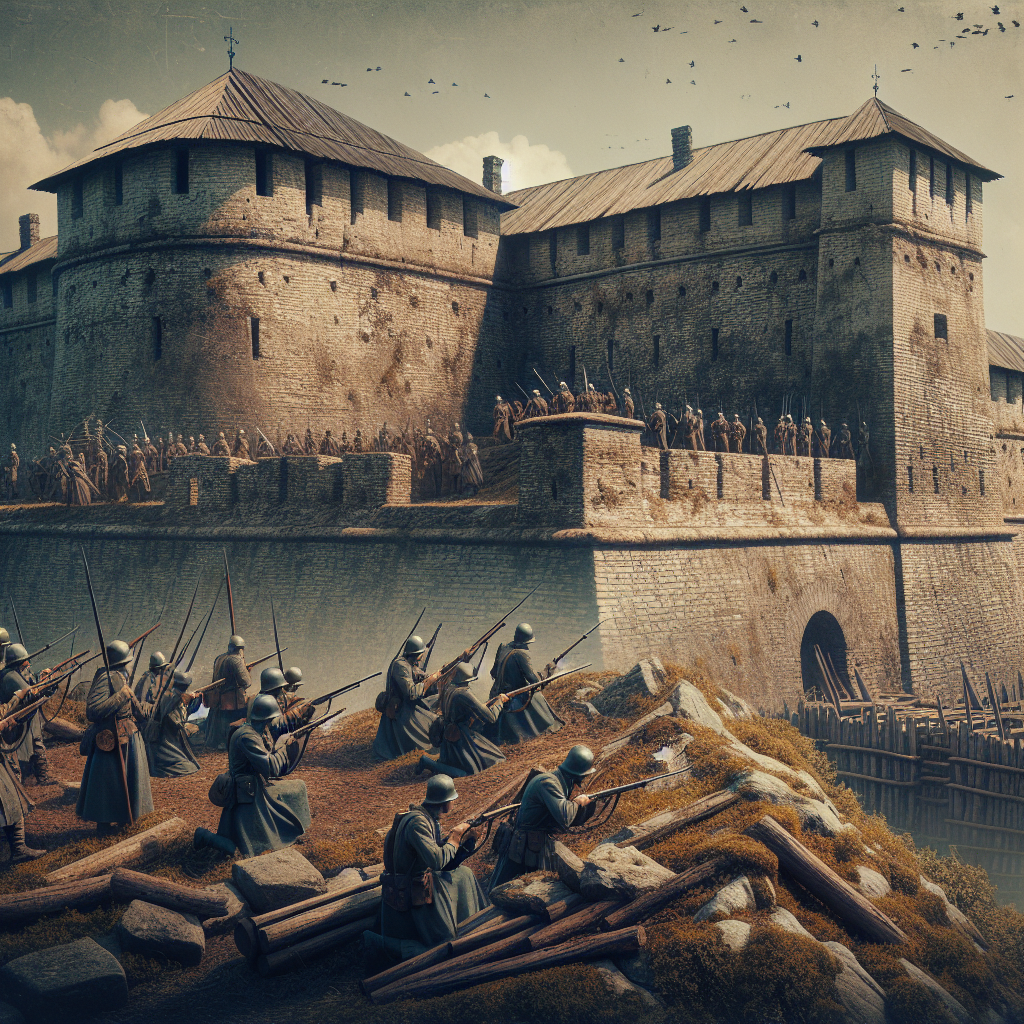
Having driven past the Hamina Fortress numerous times, we finally carved out some time to explore this cherished landmark. With the sun shining, we set off to uncover the secrets of this historic site. A narrow walkway atop the fortress’s curtain walls beckons those brave enough to tread carefully. The drop is steep, so sticking to the path is essential. We chose the route heading toward the Hamina summer park, eager to take in the views.
Access to the Hamina Fortress is versatile. We opted to start our day with a cup of coffee at Hamina Town Hall, relishing the town’s distinctive circular layout before making our way to the fortress. Our journey began at Hamina Bastion, a venue that now hosts a variety of cultural and community events, including the renowned Hamina Tattoo, a military music festival.
The central bastion, constructed in the early 1800s, features a robust 240-meter embankment supported by 58 brick casemates—gun emplacements that once fortified the fort’s defenses.
The Star-Shaped Bastion Design
Hamina Fortress stands out with its unique star-shaped design, marked by six bastions, each named after Finnish towns that boasted fortifications in their time: Savonlinna, Hamina, Helsinki, Turku, Hämeenlinna, and Lappeenranta. Surrounded by curtain walls and moats, the fortress also displays remnants of outer defensive structures, including ravelins.
For military architecture enthusiasts, the fortress offers an intriguing glimpse into the renovations carried out by the Russians in the 1790s. Among these updates were caponiers—roofless defensive structures that line the outer fortress walls. We even found ourselves standing atop one of these as we ambled along the curtain wall.
As we strolled toward a noticeable indentation along the interior curtain walls, we descended to what appeared to be ground level. To our surprise, we discovered that this hollow was once a gunpowder reserve, strategically placed near the fortress’s defensive positions. Constructed in 1785, these reserves served numerous purposes as communication hubs, gas shelters, and even, less glamorously, as potato sheds.
Exploring Hamina While Enjoying the Fortress
The area surrounding the fortress showcases an array of low wooden buildings dating mainly from the 1800s, with some older structures from the 1700s. Our exploration concluded at Hamina Summer Park, established in the 1850s within the bastion’s grounds. The lush greenery almost concealed the imposing curtain walls that encircle the park.
A Brief History of Hamina Fortress
Designed in a star-shaped bastion style, Hamina Fortress’s distinctive circular layout draws inspiration from Italian Renaissance models, particularly the town of Palmanova. Swedish general Axel von Löwen masterminded the fortress’s design, while the medieval merchant town of Vehkalahti—later renamed Hamina—began its transformation alongside the fortress’s construction. Even today, the town’s circular center is a rarity.
Following the Great Northern War (1700–1721), Sweden, which had governed Finland until 1809, lost the nearby Fortress of Vyborg to Russia. To safeguard southeastern Finland, Sweden initiated the construction of Hamina Fortress in 1722. Building began in the 1720s and progressed in stages, fortifying the eastern border alongside Lappeenranta’s own stronghold. However, during the Russo-Swedish War of 1741–1743, a partially completed fortress fell into Russian hands.
With the signing of a treaty in 1743, Hamina became part of the Russian Empire. Over the next two centuries, the fortress was modernized and served as a military garrison. Although Finland became an Autonomous Grand Duchy after Sweden ceded control in 1809, the fortress’s military significance gradually waned.
Visiting Hamina Fortress
Address: Simply enter Hamina Bastion into your GPS. Alternatively, you can use the address Raatihuonenkatu 12, 49400 Hamina.
Getting There:
- By Car: Ample parking can be found throughout Hamina’s center, including larger lots near supermarkets (subject to time limits).
- Cycling: While you can’t cycle directly on the fortress walls, secure parking is available nearby.
- Public Transport: Buses run from Kotka to Hamina frequently. The nearest bus stop is Hamina market square, approximately 700 meters from the Bastion. Be sure to check the Route Planner for schedules.
Accessibility: The area is partially accessible, with paths along the high walls being notably narrow. For the best views, visit Hamina Kesäpuisto Park or the vicinity of the Bastion.
Hours: The fortress is open year-round, 24/7. During winter, caution is advised, as snow and ice can obscure hazards or create slippery conditions.
Facilities: The area lacks official facilities.
Further Explorations
If military history piques your interest, consider visiting nearby Luumäki, home to the famous Salpalinja Fortress sites.