
Finland is a striking country located in the northern reaches of Europe, renowned for its geographical remoteness and severe climate. With approximately two-thirds of its land shrouded in thick forests, Finland wears the title of the most densely forested nation in Europe. This land serves as a symbolic divide between Western and Eastern Europe, with vast wilderness leading to Russia to the east and the calm waters of the Gulf of Bothnia embracing Sweden to the west.
Finland’s journey through history is notable. It was a part of Sweden from the 12th century until 1809 before becoming a grand duchy under Russian rule. The nation declared its independence on December 6, 1917, following the upheaval of the Russian Revolution—but not without sacrifice, as it ceded roughly one-tenth of its territory during the 1940s, including the Petsamo area, a vital access point to the ice-free Arctic coast, and much of southeastern Karelia.
Quick Facts
Audio File: National anthem of Finland
- Head Of Government:
- Prime Minister: Petteri Orpo
- Population:
- (2025 est.) 5,642,000
- Currency Exchange Rate:
- 1 USD equals 0.860 euro
- Head Of State:
- President: Alexander Stubb
- Form Of Government:
- Multiparty republic with one legislative house (Parliament [200])
- Official Languages:
- Finnish, Swedish
- Total Area (Sq Km):
- 338,491
During the Cold War, Finland adeptly maintained a stance of neutrality, although a treaty signed in 1948 with the Soviet Union mandated that Finnish territory could not be used for attacks against the Soviets from Germany or its allies. Since the end of World War II, the nation has fostered growing trade and cultural ties globally. Following an agreement between the US and the Soviet Union, Finland gained admission to the United Nations in 1955 and has since participated actively in the Nordic Council, contributing to policy coordination among member states.
Finland’s global presence rose significantly after hosting the Conference on Security and Cooperation in Europe, which birthed the Helsinki Accords in 1975. The country maintains close relationships with its Scandinavian neighbors, sharing labor markets and engaging in various economic, cultural, and scientific initiatives. It became a full member of the European Union in 1995.
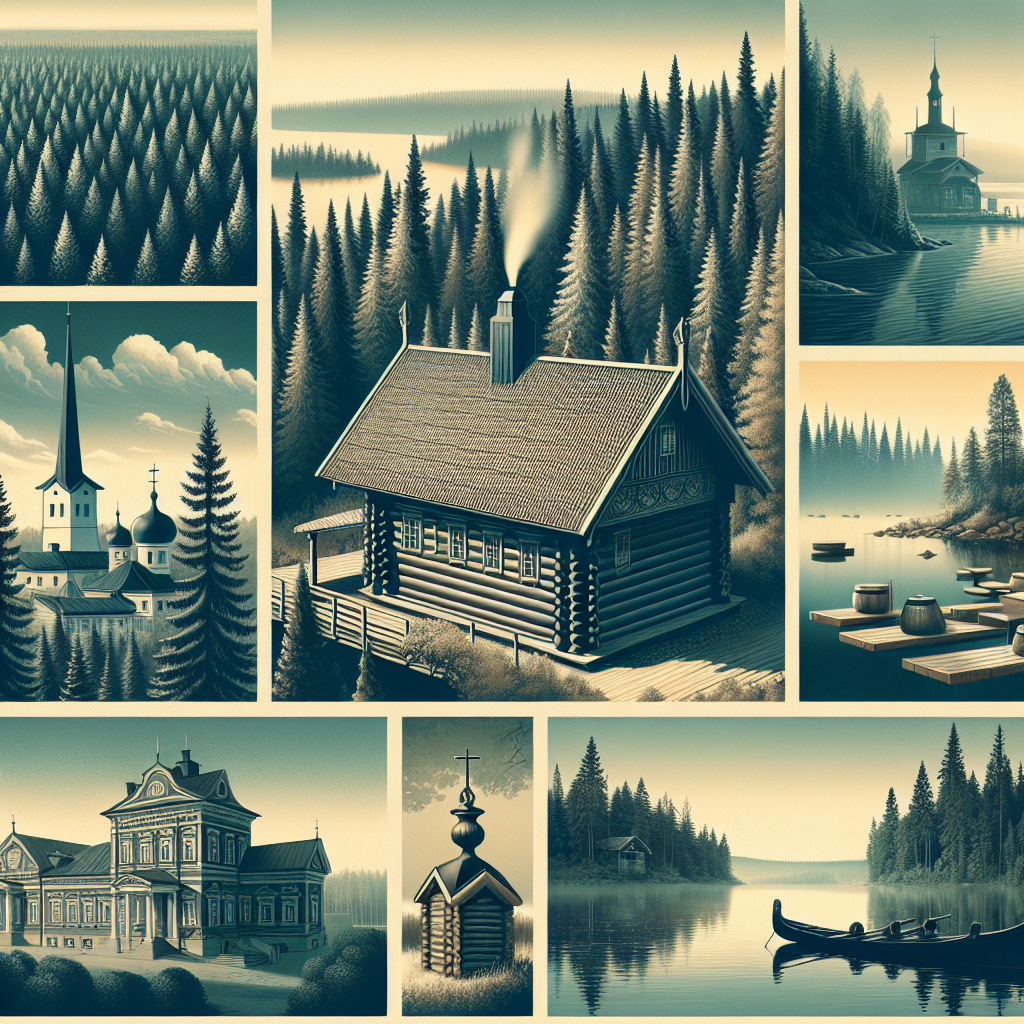
The nation’s striking landscapes, characterized by dense forests and shimmering waters, have long inspired Finnish artists and writers. From the national epic, the Kalevala, to the works of prominent figures such as Alvar Aalto and Jean Sibelius, the themes and imagery drawn from this unique environment resonate deeply within the country’s cultural identity. In the words of poet Edith Södergran, the connection between Finns and their landscape is both profound and personal:
The tree of my youth stands rejoicing around me: O human!
And the grass bids me welcome from foreign lands.
My head I recline in the grass: now finally home.
Now I turn my back on everything that lies behind me:
My only companions will be the forest and the shore and the lake.
This deep-seated bond with nature is woven into Finnish proverbs and folklore. However, the challenging climate in the northern parts of the country has meant that a significant portion of the population—one-fifth—resides in and around Helsinki, the capital, which is the northernmost capital city in continental Europe. Even though many Finns dwell in urban areas, nature—especially the forest—remains close to their hearts and resonates through their daily lives.
Land
Finland shares its border with Norway to the north, Russia to the east, and the Gulf of Finland to the south, while Sweden lies to the northwest. Including the autonomous territory of Åland, an archipelago at the mouth of the Gulf of Bothnia, its impressive geography hosts vast expanses of the province of Lapland, which lies north of the Arctic Circle.
Relief
Characterized by its abundant forests and numerous lakes, Finland harbors about 56,000 lakes and a plethora of rivers, creating a patchwork of blue and green when viewed from above. While its relief features generally maintain a level consistency across much of the country, the striking beauty of Finland’s landscape remains undeniable.
The bedrock of Finland is largely composed of ancient granite, a remnant of Precambrian times dating back nearly 4 billion years. The country reveals low-lying terrains in the south that gradually rise in elevation toward the center and northeast. The extreme northwest features some mountainous areas, including Mount Halti, which stands at 4,357 feet (1,328 meters), making it Finland’s highest peak.
With a coastline stretching approximately 2,760 miles (4,600 km), Finland’s shoreline is intricately indented and dotted with thousands of islands. The Turku archipelago in the southwest boasts the largest concentration, blending seamlessly into the Åland Islands. While the southern islands typically rise few feet above sea level, those on the southwest coast reach heights exceeding 400 feet (120 meters).
The landscape of Finland was significantly molded by the Ice Age. The receding glaciers scattered morainic deposits, forming winding ridges of stratified gravel and sand known as eskers, running from northwest to southeast. Prominent among them are the Salpauselkä ridges, three parallel formations stretching across southern Finland. The immense weight of the glaciers depressed the Earth’s crust by hundreds of feet; consequently, regions previously burdened by ice are now emerging from the sea—turning formerly submerged land into solid ground at a rate of roughly 0.4 inches (10 mm) per year.
Drainage and Soils
Finland’s waterways constitute about one-tenth of its territory, comprising ten major lakes each over 100 square miles (250 square km) in area, alongside countless smaller lakes. The largest, Lake Saimaa in the southeast, spans roughly 1,700 square miles (4,400 square km). Other significant lakes include Päijänne and Pielinen, while Inari is located in the far north.
Many rivers flow into these lakes, which mainly remain shallow; only three exceed depths of 300 feet (90 meters). Lake Saimaa drains into the much larger Lake Ladoga in Russia via the Vuoksi River, while drainage from Finland’s eastern Uplands passes through the lake system of Russian Karelia toward the White Sea.
In the far north, the Paats River and its tributaries drain extensive areas into the Arctic, while on the western coast, rivers such as the Tornio and the Kemi flow into the Gulf of Bothnia, with the latter being Finland’s longest river at 343 miles (550 km). Several other rivers make their way southward, pouring into the Gulf of Finland.
The soils of Finland are largely gravelly in areas with eskers and include extensive marine and lake deposits, forming some of the most fertile lands. Historically, nearly a third of Finland was covered by wetlands, but many of these areas have since been drained and transformed into forests. Thick layers of peat soil remain in the northern third, while the Åland Islands predominantly feature clay and sand.
Climate
In Finland, particularly north of the Arctic Circle, winters are rigorous and protracted, with temperatures plummeting to as low as −22 °F (−30 °C). Snow remains on the northern slopes throughout winter, while the brief summer months—marked by the phenomenon of the Midnight sun in Lapland—can see temperatures soar to 80 °F (27 °C). To the south, the moderating effect of the Baltic Sea and the Gulf Stream yields slightly milder winter temperatures.
Winter reigns as the dominant season across Finland. In the Arctic regions, polar night stretches over 50 days, whereas southern Finland experiences just a six-hour day at the shortest. Annual precipitation averages about 25 inches (600 mm), with one-third falling in the form of sleet and snow. In winter, freezing of surface waters is commonplace.