

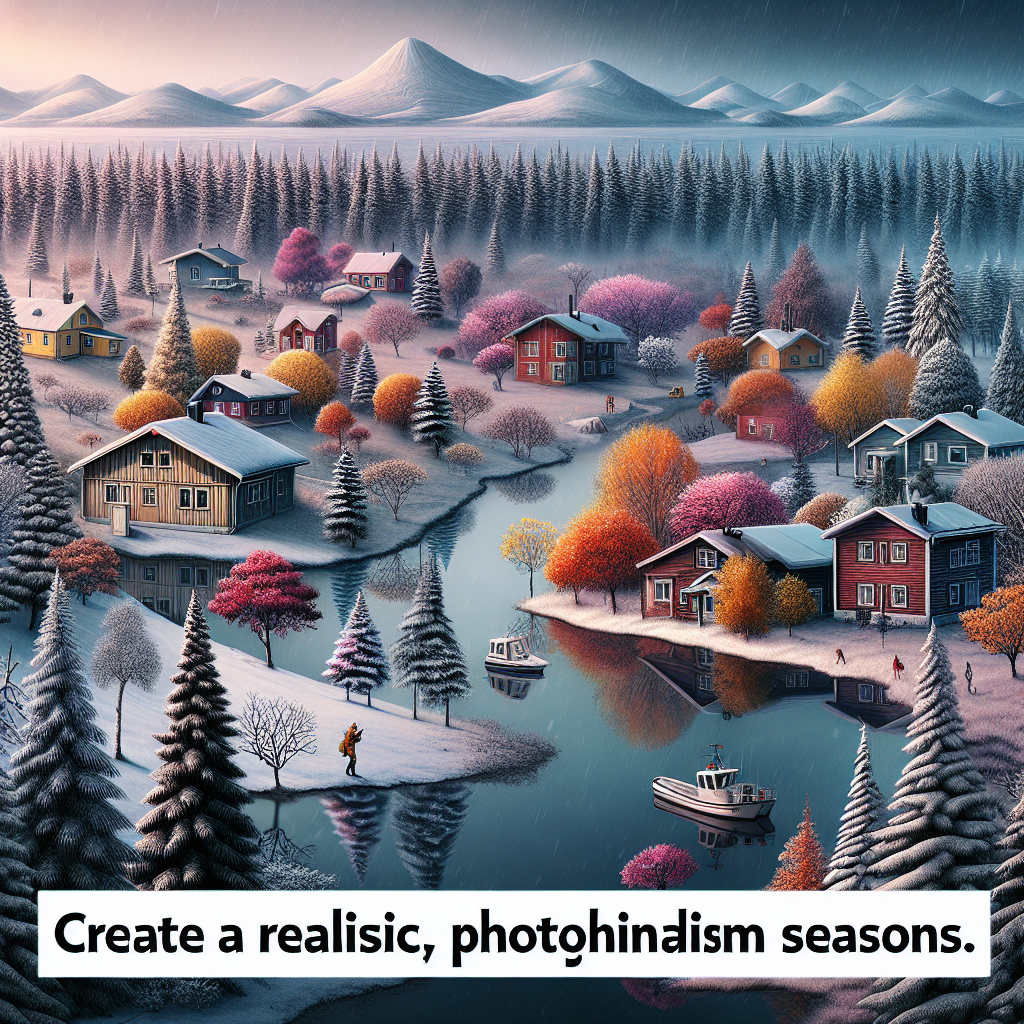
In Lapland, the year isn’t simply divided into four seasons; there are, in fact, eight distinct phases that each contribute to the region’s rich tapestry of nature. For those accustomed to the more straightforward seasonal changes further south, appreciating these subtleties may take a little time. However, after experiencing a complete year in this stunning landscape, each season’s unique character becomes undeniably clear.
Wondering what these eight seasons entail? Allow me to share my insights, drawn from personal experience.
Deep Frost Winter
Our journey begins with Deep Frost Winter. The memories of the polar night still linger, as daylight remains scarce and twilight casts a long shadow. This period often brings the coldest days of the year, with temperatures plummeting to -30°C. The crystalline starry skies present a breathtaking backdrop, making it an ideal time for witnessing the Northern Lights. By the time Deep Frost Winter sets in, the snow has thoroughly blanketed the landscape, marking the pinnacle of winter’s embrace.
What sets this phase apart from the preceding polar night is the subtle anticipation of spring on the horizon. Starting in January, the lengthening days provide a sense of warmth and hope as thoughts of sunny late-winter afternoons begin to brighten spirits. It’s fascinating just how noticeably daylight expands within a week.
Crust Snow Spring
Next comes Crust Snow Spring, a time when daylight stretches luxuriously and nature stirs from its slumber. On those first sunlit days, both the landscape and the villages seem to come alive. It’s hard not to smile as the warmth gradually seeps into daily life.
Though the cold still reclaims the nights, daytime temperatures increasingly inch above freezing. Trees begin losing their snow and ice cloaks, revealing a more vibrant and blossoming environment. This season is particularly splendid for outdoor enthusiasts, especially skiers and snowshoers, who can relish extended excursions without the urgent worry of early nights. After months of being buried in snow, people are eager to venture outside. However, this time can also be unpredictable; I vividly recall a spring during my residency in Lapland when the snow stubbornly refused to form a crust before melting completely.
Ice-Break Spring
My affinity for water makes Ice-Break Spring one of my favorite seasons, rivalling summer for its splendor. There’s something exhilarating about witnessing winter’s defeat as the sun’s warmth liberates the waterways from their icy confines. Rivers and streams begin to babble joyfully, while the ice covering the lakes gradually gives way. Amidst the melting snow, you can even glimpse the birch buds, a sign of life pushing forth despite the lingering chill.
The defining feature of Ice-Break Spring is the dramatic release of large rivers from their frozen states, a powerful spectacle to behold. In places like the Ounasjoki, this season can bring about significant flooding.
Even during this transitional phase, the snow may still hold, but it evolves into slush and icy fragments before vanishing entirely.
The Midnight Sun
The Midnight Sun requires little introduction; it lights up the sky even at midnight. The further north you travel, the more radiant the phenomenon becomes. In the far reaches like Utsjoki, the brightness resembles that of midday, while in southern Lapland, the warm yellow tones prevail.
As the Midnight Sun season unfolds, the natural world bursts into vibrant life. With the last remnants of snow disappearing, everything transforms into a lush canvas of green. Reindeer, shedding their winter fur, appear a bit scruffy, while adorable calves frolic around. However, one must also brace for the arrival of mosquitoes, which become a fixture of life both in villages and the wilderness. Typically, this season welcomes its most relentless mosquitoes around Midsummer, lasting through August. For those looking to experience the Midnight Sun without these pesky intruders, late May or the early weeks of June are prime times, providing the added perk of fewer tourists.
Harvest Season
Harvest Season subtly begins during the Midnight Sun with the first cloudberries and bilberries, but it truly flourishes in late summer, just before autumn’s vibrant display. As the peak of the Midnight Sun’s brilliance wanes, nature readies itself to provide a bounty of berries and mushrooms for gathering.
The nights grow darker, but the trees display their lushest moments, and the air carries a detectable hint of late summer. Before long, the first yellow leaves from the birch trees signal that another season is on the horizon.
Autumn Colors
Autumn arrives with an unmistakable flourish. While the landscape remains abundant in mushrooms and lingonberries, the colors are simply breathtaking. Fields of bilberries, bog bilberries, and crowberries create a vibrant ground cover, while birch trees blaze orange and aspens transform into stunning reds. As the Northern Lights start their return, even the sight of a star-studded sky after the Midnight Sun stirs deep emotion.
As lingonberries ripen, the reindeer rutting season typically commences, heightening the need for caution around the male reindeer, who may act unpredictably in their excitement.
With autumn’s arrival, the initial frosts usually take care of the last of the mosquitoes, although pesky biting midges may linger a bit longer.
First Snow
Following autumn, we welcome the season of First Snow. By this time, trees have shed their leaves, and vegetation begins to retreat. Although we long for a thick mantle of snow, the ground gradually grows icier with each passing morning until the day arrives when temperatures no longer rise above freezing. The balance of night and day feels particularly pronounced, allowing for tranquil, restorative rest before the next change unfolds. Days are still bright, but the nights arrive with the depth of winter.
As waters begin to freeze, the moment finally comes when the first snowflakes fall. The world is instantly transformed, brightening remarkably with its soft, white cover. It’s this precious light that makes the first snowfall so eagerly awaited.
Polar Night
The year draws to a close with the Christmas Polar Night, when life seems to retreat into quietude. Energy ebbs as everything rests—frozen waters and snow-laden trees create a serene stillness. The only sounds are the gentle crackling of frost in the forests. Although the depths of winter’s chill may not yet have settled in, this time marks a significant shift.
In Northern Lapland, the official polar night lasts approximately two months, while at the Arctic Circle, it is merely a day long. During this period, frost tightens its grip, and the snow cover deepens. At this juncture, the prospect of a firm snow crust seems distant. Instead, we must accept the soft, deep snow beneath our feet.
Among Lapland’s eight seasons, the Christmas Polar Night is, personally, the most challenging. I often find it a time simply to endure. However, the joy of experiencing the first rays of sunlight afterwards is magnified, a far sweeter reward after enduring the darkness.
Read next
10 Great Reasons to Visit Lapland in Summer
Finland’s Midwinter and Midsummer: How They Differ Between Lapland and Southern Finland
You need to see this: nature in Lapland is now breathtakingly red, orange, and yellow
This Incredibly Beautiful Blue Phenomenon in Lapland – Do You Know What It Is?