

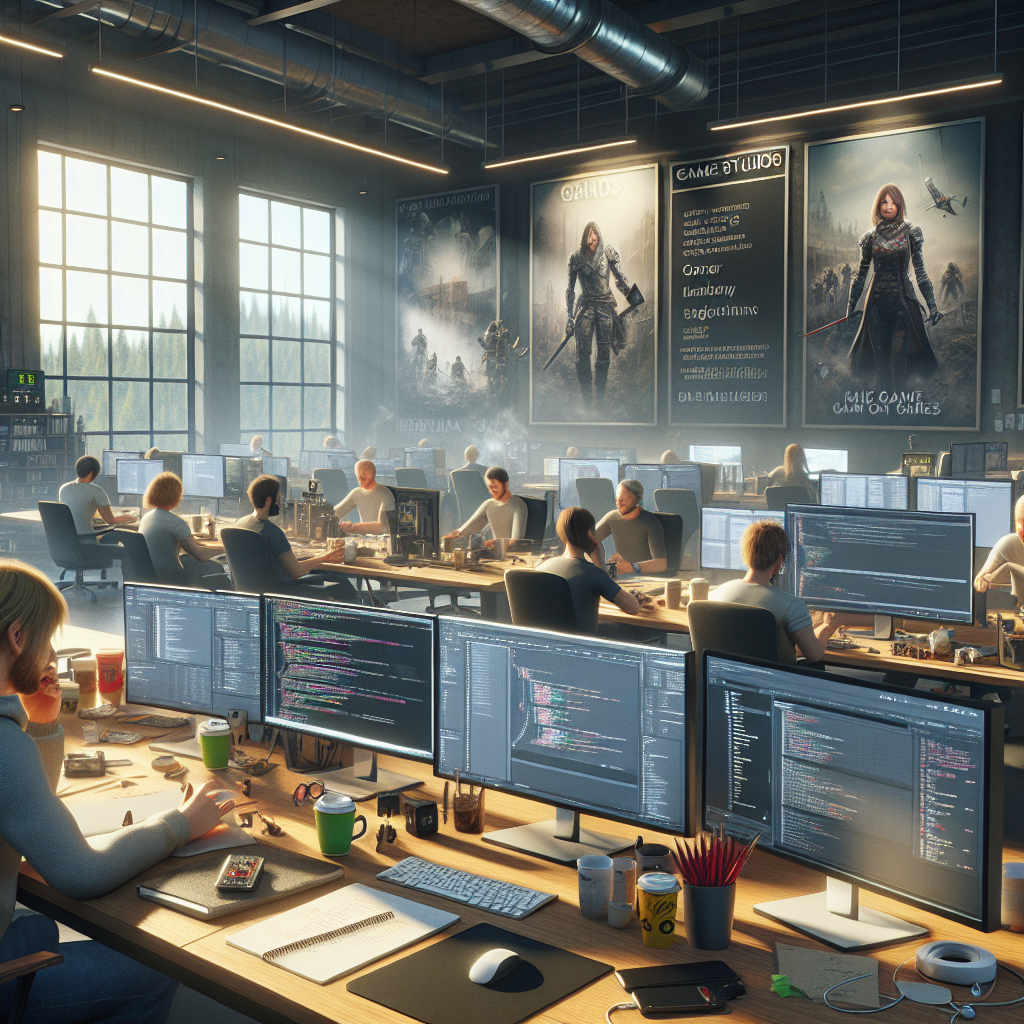
Finland, a nation of just 5.6 million, has surprisingly emerged as a powerhouse in the gaming industry. From mobile sensations to critically lauded console games, Finnish developers have significantly influenced modern gaming far beyond the country’s modest size.
This article delves into the factors behind Finland’s remarkable ability to foster successful game studios. It explores key elements such as education, industry structure, funding avenues, cultural nuances, and the practical realities of the gaming ecosystem. While notable companies like Supercell, Remedy Entertainment, Rovio Entertainment, and Housemarque serve as standout examples, the focus here is on the underlying structural reasons for this success.
Assessing the Current Landscape of Finland’s Game Industry
Finland’s gaming sector boasts annual revenues in the billions of euros, with the bulk stemming from exports. Given the small domestic market, Finnish studios often design their products for international audiences from the onset.
The industry is predominantly composed of small to mid-sized studios, with only a handful of larger companies employing hundreds. Many studios operate with teams ranging from 10 to 50 developers. Key hubs are located in Helsinki, Espoo, and Tampere, though smaller cities boast vibrant studios as well.
Historically, mobile gaming has driven much of the industry’s growth, but recent years have seen a significant expansion into PC and console development, with high-production value, narrative-driven games gaining traction.
What Fuels Finland’s Success in Game Development?
1. A Robust Educational System
Finland places a strong emphasis on education, investing heavily in specialized programs in game design, programming, art, and production across universities and applied sciences. Students often get hands-on experience through real prototypes before graduation.
Prominent institutions like Aalto University and Metropolia University of Applied Sciences adopt a multidisciplinary approach, merging technology, art, and business—reflecting the collaborative nature of modern game studios.
Fluency in English further enhances the landscape, enabling most students and professionals to navigate international publishing and attract foreign talent with ease.
2. A Legacy of Early Success
The triumph of companies like Rovio Entertainment and Supercell in mobile gaming has spawned a wealth of knowledge and experience. This success has resulted in a network of seasoned founders, investors, and advisors.
Many who were part of these early giants have since gone on to establish new studios or become angel investors, thereby perpetuating a cycle of expertise within the ecosystem. For example:
- Veteran producers offer mentorship to budding founders.
- Former engineers launch specialized service firms.
- Executives reinvest profits into emerging startups.
This interconnectedness minimizes common pitfalls faced by newcomers, as teams can glean insights from those who have already navigated the complexities of global publishing and scaling.
3. Public Funding Mitigates Early-Stage Risk
Structured public funding, facilitated by Business Finland and similar initiatives, supports research, development, and innovation in the early stages of studio formation.
While public funding doesn’t guarantee success, it alleviates financial pressure during the prototype phase. Many studios leverage this support to test mechanics before pursuing private investment.
It’s crucial to note some common misconceptions:
- Public funding is not a given; applications must include thorough plans and reporting.
- Funding typically covers only a portion of total project costs.
- Demonstrating international market potential is usually a prerequisite.
This framework encourages thoughtful planning from the outset.
4. A Small Domestic Market Promotes Global Thinking
With a population too small for large-scale local sales, Finnish studios are compelled to adopt a global mindset right from the get-go.
This has led to practical adaptations:
- Games are typically launched in English first.
- Monetization models are designed with global player behaviors in mind.
- Marketing strategies often target North American and Asian markets from day one.
The outcome is that Finnish teams cultivate substantial expertise in international user acquisition, analytics, and community engagement.
5. A Culture That Fosters Focus and Autonomy
Finnish workplace culture is characterized by emphasis on independence, flat hierarchies, and trust. Developers are given considerable ownership over their projects.
This environment nurtures experimentation, allowing teams to iterate efficiently without the burden of excessive internal politics. Decisions are predominantly data-driven, rather than personality-driven.
Practically, this translates to:
- Shortened decision-making chains.
- Open communication across roles.
- Clearly defined responsibilities for outcomes.
Such traits are well-suited to the demands of game development, which relies on rapid iteration and cross-disciplinary coordination.
The Role of Major Studios
Supercell
Globally recognized for titles like Clash of Clans and Brawl Stars, Supercell operates through small, autonomous teams dubbed “cells,” each enjoying a significant degree of independence. This operational model has inspired many Finnish studios, with founders often citing small-team autonomy as a foundational principle.
Remedy Entertainment
Known for its cinematic storytelling and technical innovations, Remedy has produced high-quality games such as Alan Wake and Control, proving that Finland’s prowess isn’t confined to mobile gaming but extends to narrative-driven console and PC titles as well.
Housemarque
Housemarque earned acclaim through its arcade-style action games, culminating in the release of Returnal. The studio’s evolution into PlayStation Studios exemplifies a path from independence to global partnership.
Supporting New Studios in the Finnish Ecosystem
Community Connections
Helsinki boasts a tightly-knit game development community, facilitating rapid knowledge exchange through events, meetups, and informal networks.
It’s not uncommon for founders to reach out directly to experienced peers, allowing advice and insights to flow freely through personal connections.
Access to International Capital
While local investors are present, many studios pursue international venture capital, benefiting from a climate well-versed in working with global funds.
Founders are typically attuned to investor expectations early on, reducing obstacles during fundraising efforts.
Specialized Service Providers
The industry’s landscape includes companies that specialize in user acquisition, analytics, localization, and backend infrastructure. This allows smaller teams to outsource non-core tasks, enabling them to concentrate on design and technology.
Challenges Facing Finnish Game Studios
Yet, the presence of success stories doesn’t eliminate challenges. Common hurdles include:
- Talent competition: Major studios often vie for experienced developers.
- Scaling risks: Rapid hiring can challenge workplace culture and quality control.
- Market volatility: Changes in mobile platforms and monetization strategies happen swiftly.
- Global competition: Studios find themselves contending with teams from North America, Europe, and Asia.
Many early-stage studios close within a few years—a trend that is all too common in the global gaming landscape. While public funding and mentorship may mitigate risks, they cannot eliminate them entirely.
Is Finland Poised to Maintain Its Leadership in Game Development?
Various structural elements suggest that Finland will continue to be a relevant player in the gaming scene:
- Strong educational pipelines.
- Experienced second-generation founders.
- A global outlook established from the very beginning.
- Diversification beyond mobile into console and PC gaming.
However, lasting success will hinge on adaptability. The emergence of artificial intelligence tools, evolving platform policies, and rising development costs are transforming the landscape. Finnish studios must navigate this landscape by balancing creativity with sustainable production models.
What remains certain is the ecosystem’s commitment to focus, autonomy, and global ambition—traits that have defined Finnish game development for over a decade. Finland’s ascendance in the gaming world is no mere coincidence; it’s the result of a harmonious blend of education, public backing, international ambitions, and a tightly-knit professional community. The outcome? A small yet formidable country making a profound impact on how millions around the globe enjoy their games.