

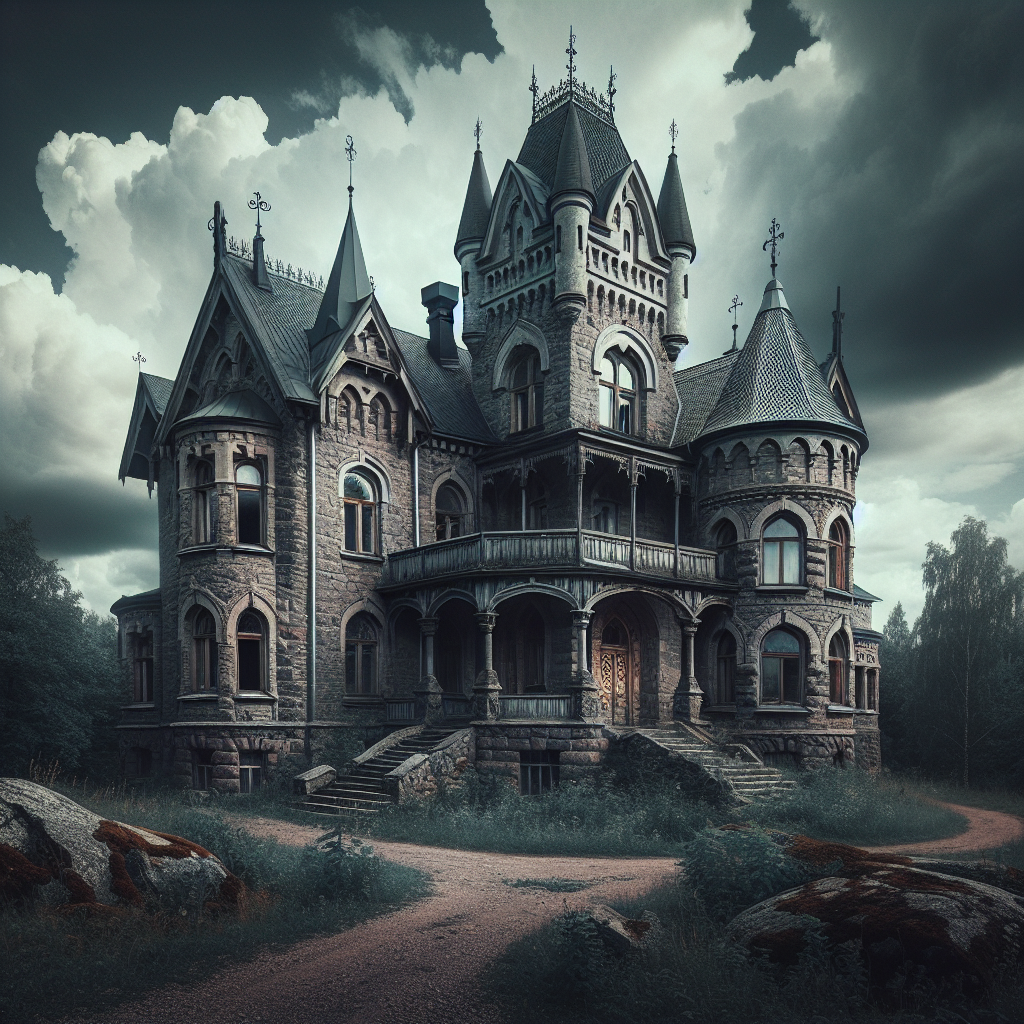
Olavinlinna Castle – The Lady in White
Nestled on a rugged island in the heart of Savonlinna lies Olavinlinna Castle. Erected in 1475 by a Danish knight, the fortress was designed to shield the Swedish kingdom from Russian incursions. With its three imposing towers and stout stone walls still standing, it’s celebrated as one of Finland’s most well-preserved medieval landmarks.
The legend of the “Lady in White” adds to the castle’s allure. According to local lore, a young woman was wrongfully accused of treason during a siege, leading to her execution, with her body unceremoniously cast into the lake. Over the years, witnesses have claimed to glimpse a pale figure roaming the castle’s corridors or appearing on the battlements as dusk falls. Some believe her spirit reemerges to forewarn of significant events.
Today, Olavinlinna offers guided tours and hosts the annual Savonlinna Opera Festival, allowing visitors to traverse the same historic passages where the ghostly figure is said to appear—though her appearance remains a tantalizing mystery.
Mustio Manor – The Restless Owner
Located in Raseborg, Southwest Finland, Mustio Manor (also known as Svartå Manor) was constructed in the 18th century as the residence of the affluent ironworks magnate Magnus Linder II. This splendid example of Gustavian architecture is enveloped by an expansive park, home to century-old trees.
The haunting here is intimately tied to Linder himself. Locals recount tales of unexplained footsteps echoing through the halls and doors mysteriously swinging open after his passing. Notably, the unmistakable scent of cigar smoke—his favored indulgence—has been reported wafting through vacant rooms. Guests who spend the night in the manor’s hotel often describe hearing piano music in the dead of night, even when the instrument lies undisturbed.
Mustio Manor now serves as a museum, restaurant, and hotel. While ghost stories aren’t a part of the official narrative, the manor’s creaking floors and flickering candlelight effortlessly evoke the presence of its former owner still lingering within its walls.
Kastelholm Castle – Prisoner’s Sorrow
Perched on Åland, an autonomous island archipelago flanked by Finland and Sweden, Kastelholm Castle dates back to the late 14th century. Originally built as a stronghold, it later became a prison. Though it suffered significant damage in the 17th century, efforts have been made to restore parts of its former glory.
The local legend speaks of a ghostly prisoner whose spirit lingers in the castle’s dank dungeons, ensuring their story is not forgotten. Some visitors have reported hearing mournful whispers or the distant clanking of chains within the castle’s lower levels. Others claim to have seen shadowy figures flitting through the courtyard after dark. The castle’s isolation and its tumultuous past imbue it with a palpable sense of unease.
Today, Kastelholm welcomes summer visitors, with its haunted prison cells included in tours that reveal the harsh realities faced by those held captive within its ancient walls.
Spruce Castle Ruins – Whispers by the Sea
Kuusisto Castle, located near Turku, was established in the early 14th century as the residence of the Bishop of Turku, only to be demolished in the 16th century on the orders of King Gustav Vasa to eliminate it as a military threat. Today, only remnants of its stone foundations and partial walls overlook the tranquil sea.
Despite its ruins, the site is rife with strange occurrences. Evening visitors often report hearing whispers carried on the wind, seeming to echo from long-gone priests and bishops. Others say the voices are those of sailors lost to the treacherous waters nearby.
The site is open for exploration and becomes a favored spot for picnics and photography. However, as the sun sets, visitors often describe an unsettling quiet, pierced only by the mysterious whispers swirling through the air.
Raseborg Castle – The White Knight
Constructed in the 14th century atop a rocky promontory, Raseborg Castle was once a pivotal military and administrative hub. The castle fell into disuse in the 16th century as the sea receded, rendering it less defensible.
According to legend, the “White Knight” roams the grounds on misty mornings, thought by some to be a former commander eternally tasked with guarding the castle’s gates. Others maintain it is the spirit of a knight who fell in battle defending this stronghold. Visitors frequently report the sound of clattering armor and unseen footsteps traversing the castle’s winding stone staircases, even in the absence of any living souls.
The castle ruins remain open to the public, where summer events often weave the ghostly tale into their atmosphere. The surrounding nature trails make for a scenic, albeit slightly eerie, exploration.
Why Finland’s Castles and Manors Are Steeped in Folklore
Many of Finland’s ghost stories are rooted in its turbulent history, marked by conflict, isolation, and harsh climatic conditions. Castles frequently changed hands among Swedish, Russian, and Finnish powers, each era laden with battles, executions, and sieges. Manor houses were often tied to local economies and social dynamics, leading to resentment and heartache.
During the long, dark winter nights, storytelling by the fireside kept these histories alive, giving shape to the unexplained events of the past. Over the years, these tales have woven themselves into the cultural fabric of Finland. Regardless of one’s belief in ghosts, these narratives breathe life into the stone walls and wooden halls, allowing us to glimpse the human experiences that shaped the nation.
Visiting Tips for Haunted Sites
- Check seasonal opening hours, as many castles only welcome visitors during the summer months.
- Wear sturdy footwear, particularly in areas where the ground may be uneven.
- Be mindful of private spaces in manor houses that operate as hotels or restaurants.
- Bring a flashlight for late-day visits—some sites may have limited lighting.
- Consider joining a guided tour for both historical insights and local ghost stories.
Exploring History and the Paranormal
The haunted castles and manors of Finland offer a blend of thrill and insight; they are vibrant remnants of our shared past. Walking through the venerable halls of Olavinlinna or standing amid the ruins of Kuusisto connects visitors to centuries of human experiences—both documented and whispered in shadows. Whether or not the spirits are real, their stories resonate in ways that official histories cannot. These alluring sites challenge us to regard Finland not just as a land of lakes and forests but as a place where history and legend intertwine in a haunting embrace.