

According to the World Happiness Report, the title of the happiest country on Earth goes to a nature-loving Nordic nation: Finland. On the surface, it’s easy to understand why. With one of the world’s lowest corruption rates, a robust democracy, and a long history of championing women’s rights, Finland sets a high bar. Education, from daycare through university, is free, and the country boasts low crime rates, clean water, fresh air, and, notably, more saunas than there are cars. But does this reputation for happiness translate into everyday life? Can Finns offer insights that might benefit the UK, which ranks 20th in the Happiness Report?
I begin my exploration in Helsinki, a charming capital home to just 630,000 residents. This compact city vibrates with a cutting-edge food scene, a budding technology sector, and a unique design ethos, all under the long summer days that deliver up to 19 hours of sunlight. While enjoying a coffee at Nolita, a zero-waste restaurant and bakery, Serbian-born chef Luca Basic shares his journey from a 19-year-old newcomer to a proud resident. When it comes to happiness in Helsinki, he is unambiguous. “It’s about trust in the state,” he says. “It’s more than just buses running on time or my staff affording to live in this city.”
During those endless summer days, Helsinki proves itself to be incredibly livable, with locals adept at savoring the depths of winter as well. Cafés serving warm bowls of salmon soup become havens, and some brave souls even carve out swimming holes in the frozen sea ice. Remarkably, 40% of the capital consists of green spaces, but beyond the city’s boundaries lies an expanse of nature: a tapestry of 190,000 shimmering lakes and 76,000 islands, surrounded by forests that cover 75% of the land. To the north, snowy Lapland beckons, yet wilderness is never far; you are merely a ten-minute stroll from a park or forest.
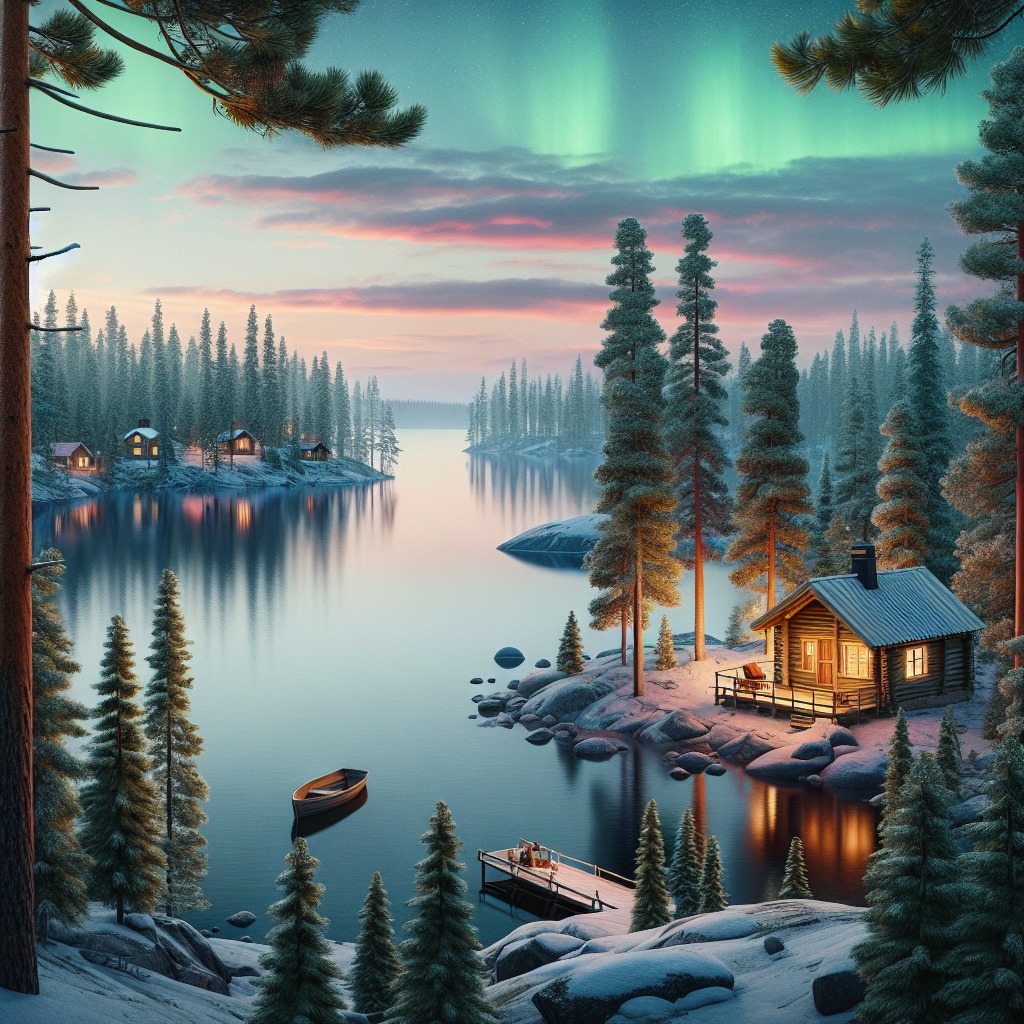
For many Finns, vacations are spent at traditional summer cabins, where modern amenities are optional, but a wood-fired sauna and a dip in the lake are essential. Remarkably, nature is considered such a health boon that there are now prescriptions for outdoor time. On Vartiosaari, a quaint, car-free island just a minute away by solar-powered ferry from Helsinki, I meet Adela Pajunen, the visionary behind this initiative. Her model has gained international recognition for its scientifically backed benefits. Together, we stroll the wellness trail she has created, foraging for wild bilberries while she identifies Valerian and Meadowsweet. Adela notes that from childhood, every Finn learns how to forage for berries and mushrooms safely. For her, connecting with nature is the core of happiness.
Nestled among the island’s pines, we find a sky-blue summer cabin, where we share tea and foraged berries with Wolfgang Zellar, a German transplant. Despite their reputation for happiness, Wolfgang explains that many Finns feel the designation may not quite fit. “Perhaps a better term would be contentment,” he muses, referring to a collective satisfaction with life as it is.
When discussing the Happiness Index, locals often remind me of the challenges they face. Concerns about the future of the welfare state, climate change, and a lengthy 830-mile border with Russia weigh on their minds. Self-deprecation also runs deep within Finnish culture. As one wise saying goes, “Suffering makes one beautiful.” While we’ve heard of hygge (Danish coziness) and lagom (Swedish balance), Finns embrace the concept of sisu—a form of stoic determination and resilience. Adela tells me that locals tend not to complain about winter weather, even as raindrops drench us during our walk, filling the air with the scent of a wet forest.
Venturing further east to the region of Kotka-Hamina, I accompany wilderness guide Simo Peri as we haul a green canoe to the water. The Kymi River sprawls like an antler, and as we paddle upstream, dragonflies dance above the surface while we keep an eye out for moose grazing nearby. Thanks to Finland’s Everyman’s Right, we’re free to paddle wherever we desire, exploring the country’s vast and varied natural resources. Later, we hike through dense woodlands, eventually reaching Lake Kukuljärvi, nestled near Ruotsinpyhtää. As Simo brews coffee and sausages over an open fire at a shared wooden shelter, I leap from a small jetty into the lake’s refreshing waters—crystal-clear and invigorating.
Cold-water swimming is a way of life here, or, as Helsinki native Leena Karppinen puts it, “In Finland, we just call it swimming.” This practice, deeply woven into the culture, comes with long-standing recognition for its mental and physical benefits. Finns don’t bat an eye at diving into icy water, even in a country where lakes remain frozen from October to May.
Perhaps that’s because they can always retreat to a sauna for warmth. These wood-fired sanctuaries have transcended their original purpose as mere bathhouses; they are now communal spaces for relaxation and socialization. Every Finnish embassy features a sauna, a unique setting where diplomats might engage in casual discussions—occasionally in their birthday suits. Though most Finns have personal saunas at home, a resurgence of public bathhouses is revitalizing this cherished tradition across the country.
On Lonna Island, a diminutive landmass measuring just 150 meters in length and a quick ten-minute ferry ride from Helsinki, I find myself in a communal sauna alongside locals of all ages, including my own baby, Sylvie. As she enjoys the experience, grinning locals assure me, “She’s Finnish now!”
Places to stay
Helsinki: Maja Maja features four tiny off-grid cabins perched along the coastline, just a ten-minute boat ride from the capital.
Åland: Sviskär is a “hermit’s cabin” nestled on a 28-hectare island in the Åland archipelago, the perfect spot for foraging or a refreshing dip in the Baltic Sea.
Lapland: Cahkal Hotel, situated high within the Arctic Circle, operates on green energy and offers guided skiing and hiking experiences under the enchanting polar night.