

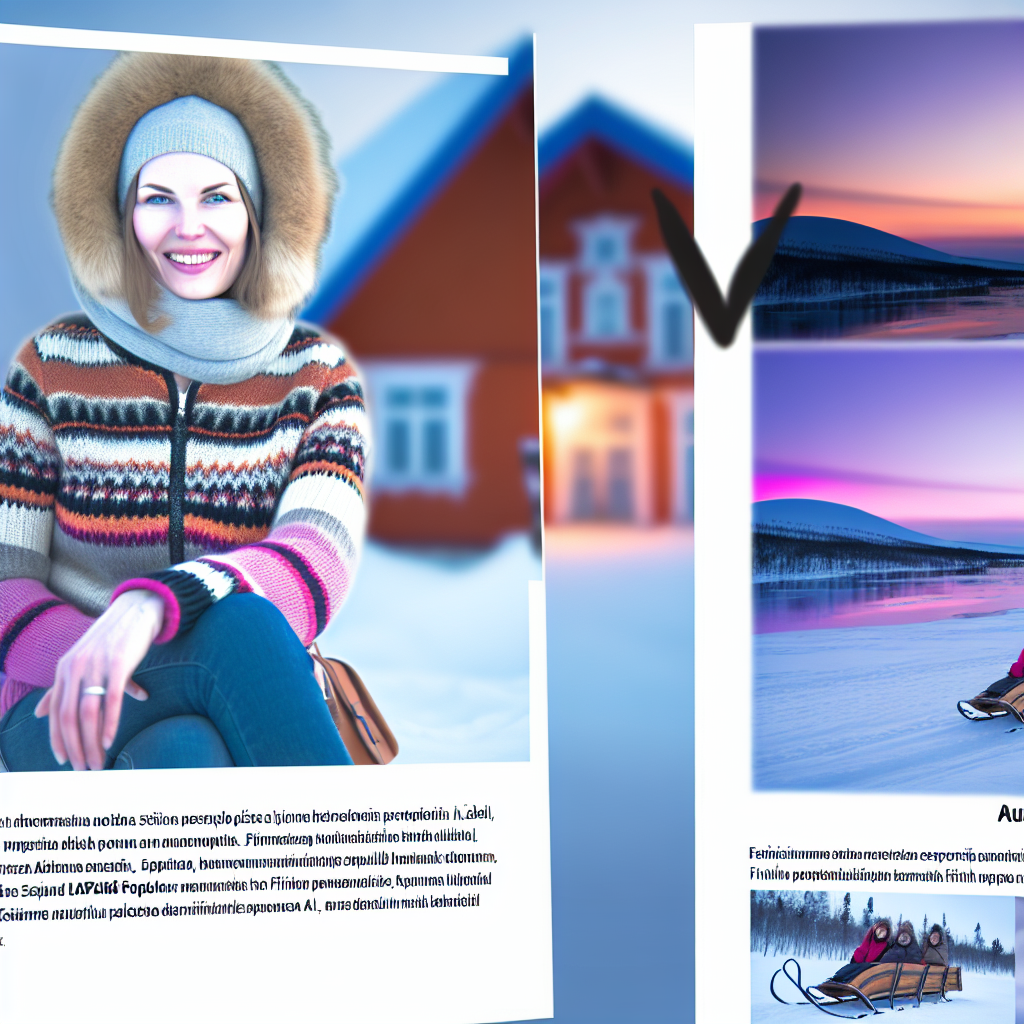
Lapland: An Investor’s Gem in the North
In the search for a secure and fruitful investment for her family, Swiss real estate investor Isabel Weinheimer, 41, turned her sights to the enchanting landscapes of Lapland.
Having previously spent a significant chapter of her life in Finland while pursuing her doctoral studies in Helsinki from 2009 to 2014, Weinheimer was already familiar with the allure of the country. Born in Germany, she developed a deep appreciation for Finland’s breathtaking nature and its warm-hearted people during her time as a student.
Today, Weinheimer balances her roles as the director of a diagnostics company with family life in Switzerland, alongside her husband and two young sons, aged 2 and 4. Their vacations are often spent exploring various natural destinations in a campervan, with Finland being a favored stop twice a year.
“Our family thrives on visiting natural sites; like Switzerland, Finland offers incredible camping terrains for outdoor activities such as hiking, cycling, and skiing,” she shares enthusiastically.
Weinheimer believes that Lapland holds untapped potential, especially among international investors. While many Central Europeans flock to the region in winter to witness the northern lights, she argues that the serene, pristine landscapes provide countless opportunities for outdoor adventures year-round.
“Every season brings its own unique charm; this past autumn, we spent several months hiking and berry-picking in Finland,” she reminisces.
Investing in Lapland
Weinheimer made her inaugural investment in a holiday apartment in Lapland three years ago, closely followed by a second property this year.
“The first cottage in Ylläs was intended for our personal use, while the second apartment serves purely as an investment. Both properties are conveniently located near one another, allowing us to host friends during visits. When we’re not there, a local operator manages the rental,” she explains.
Reflecting on the financial landscape, Weinheimer points out that investing in Lapland can yield better returns than similar properties in Central Europe, provided that one is mindful of location. “A holiday apartment should ideally be situated near functional infrastructure. We cherish the tranquility of our surroundings, enjoying activities without needing a car,” she adds.
Both of Weinheimer’s properties are situated close to Kittilä Airport, which boasts direct flights from Zurich.
“The functional transportation links and available amenities were significant factors in our purchasing decisions. While properties near the slopes of Ylläs and Levi may carry a higher price tag than those located further out, they remain competitively priced compared to Central European standards. Demand for holiday spots continues to rise, but prices in Central Europe have yet to catch up to Lapland,” she notes.
Encouraging families with children to consider Lapland, Weinheimer highlights its safety and the allure of its untouched nature. “Lapland is an excellent destination for families, as it provides a secure environment for outdoor exploration and a chance to appreciate the beauty of nature,” she insists.
The Rising Appeal of Lapland to Foreign Investors
Jussi Pirhonen, CEO of KotiSome Lappi LKV, notes that stories like Weinheimer’s are increasingly common. “International buyers are on the rise; last year, over 60 percent of accommodation bookings in Lapland came from international tourists. This trend is mirrored in real estate transactions,” he observes.
Statistics from Visitory corroborate this growth, revealing that more than 55 percent of all passengers flying into Kittilä last year were foreigners—a jump of more than 15 percent from the previous year.
According to Pirhonen, international investors are drawn not only by the attractive occupancy rates and rental income expectations of holiday apartments but also by the continuous development happening in the region. “Lapland’s tourism appeal is sustainable, offering investors the chance to blend income generation with lifestyle, creating an emotional connection to the investment,” he summarizes.
However, the boom in tourist accommodations does come with its challenges. Reports from Iltalehti indicate that Rovaniemi is now facing a shortage of reasonably priced rental apartments during peak tourist seasons. The summer of last year even saw protests against the impacts of tourism on the local community’s living standards. Pirhonen acknowledges that rising demand inevitably drives up prices when supply struggles to keep pace.
Yet, there is a silver lining. “Significant new construction is underway in Lapland’s holiday destinations to meet this rising demand, with over 100 new holiday apartments hitting the market soon. Developers of vacation homes in these areas are navigating a very different landscape compared to those in the south,” he affirms.
Pirhonen concludes that the primary demand lies in holiday apartments, which mostly averts pressure on local housing markets. “There may be some upward pressure on local apartment prices, but trends are not uniform across Finland, where property values can fluctuate dramatically.”
As Lapland continues to capture the hearts of both investors and tourists alike, it seems poised to remain a captivating destination for years to come.