

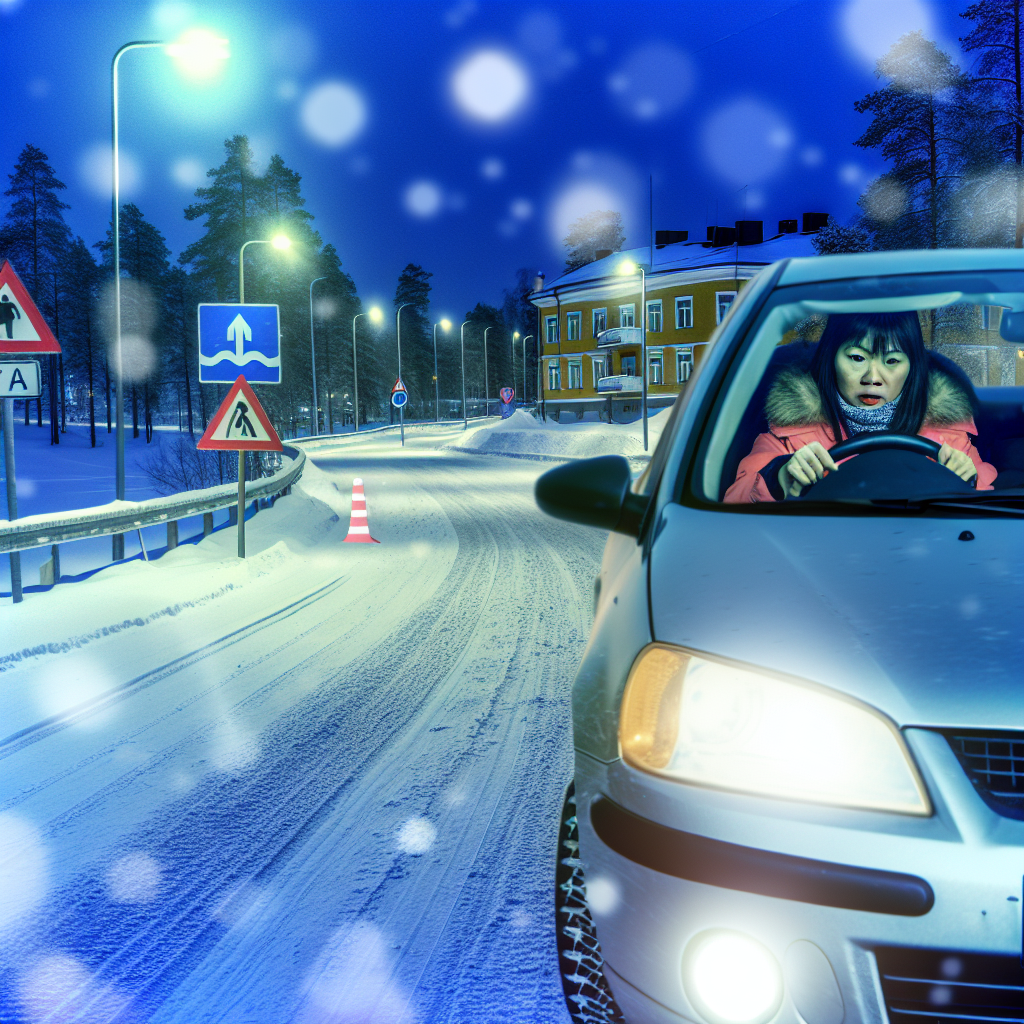
Planning to drive in Finland during winter? This guide offers essential safety tips to navigate icy roads, freezing temperatures, and rapidly changing conditions. From choosing the right winter tires to maintaining visibility, dressing appropriately, and parking safely in reindeer herding areas, we’ve got you covered with the must-know advice for winter driving in Finland.
Inspect Your Winter Tires
Your winter tires are critical for safe driving during Finland’s cold season. Ensure your vehicle is fitted with high-quality studded or non-studded winter tires. Regularly check the tread depth to guarantee adequate grip in slush, snow, and on icy surfaces. Don’t forget to monitor tire pressure as well; colder temperatures can cause it to drop significantly.
It’s worth noting that summer tires have absolutely no place on Finnish winter roads—even for short distances. Legally, winter tires are required from November 1 to March 31, with the possibility of fitting them earlier in autumn or keeping them on longer in spring, depending on road conditions.
Pack Warm Clothing and Safety Equipment
A minor vehicle issue can turn into a lengthy wait in the cold and dark. Therefore, it’s wise to carry extra warm clothing like a wool sweater, scarf, hat, gloves, and even a blanket to ensure comfort and safety should you need to exit your vehicle. If your car breaks down, activate your hazard lights to make your vehicle visible to other drivers.
Having a warning triangle and high-visibility vest is crucial during the long, dark winter months. These items help other drivers see you early, minimizing the risk of secondary accidents. Remember to position the warning triangle at least 200 meters (or roughly 700 feet) from your car to ensure visibility.
Preheat Your Vehicle
Preheating protects your engine and enhances driving comfort, especially when temperatures plummet. Using an engine block heater or fuel-powered heater simplifies starting your engine and lowers emissions. It’s advisable to begin preheating as soon as temperatures approach zero.
If your vehicle includes an interior heater, switch it on as you plug in the car. Typically found in the front passenger footwell, it’s straightforward to use. Preheating keeps windows clear, defrosts ice, and makes entering the car a much more pleasant experience.
Start Your Engine the Right Way
Cold engines demand more power to start, so it’s vital to check your battery’s condition regularly. If the engine struggles to crank, your battery might be weakening. For diesel vehicles, be sure to wait for the glow plugs to finish; in extreme cold, it may help to glow the plugs multiple times before starting.
Make it a habit to start your engine before scraping the windows. This allows you to direct warm air toward the glass, helping to loosen ice and warming up the cabin slightly before driving. While extended idling isn’t necessary, a brief warm-up is beneficial for engine performance.
Clear All Windows Safely
If your vehicle lacks a heated windscreen or a protective cover, you’ll need a snow brush and ice scraper—and remember to allocate extra time for this task.
Make sure to clean all windows thoroughly to guarantee visibility in every direction. Don’t overlook the windshield, side windows, rear window, mirrors, and lights. Ice scrapers come in various designs, from attachments on snow brushes to sturdy options favored by many Finns.
In some cases, ice can cling stubbornly to the glass. You may need to wait for the warm airflow from your running vehicle to soften the ice. This highlights the importance of allowing plenty of time before you leave and avoiding last-minute starts. Be sure to clear snow from the entire car, not just the windows. Snow atop the roof can slide down during braking, obstructing your view and creating hazardous situations.
Drive Cautiously and More Slowly
During winter, road conditions can change in the blink of an eye. Black ice, slush, and rutted surfaces will greatly influence your car’s handling. Adopt a moderate speed, avoid abrupt steering movements, and maintain significant distance from the vehicle ahead. Smooth, anticipatory driving can help keep your vehicle stable.
Wildlife tends to be most active during dawn and dusk. Deer, elk, and other animals can appear on the road unexpectedly, so keep a sharp lookout along the edges, especially in wooded areas. Again, a generous safety distance is essential—one can never predict when a driver ahead may need to brake suddenly to dodge an animal.
Keep Your Fuel Tank Full
Driving with an almost empty tank in winter is unwise. The risk of getting stranded or needing to wait for assistance can arise without warning, and having extra fuel provides added safety. Cold conditions can also lead to increased fuel consumption, making it crucial to keep your tank full or nearly full—especially on long journeys. In northern and eastern Finland, the next gas station might be a staggering 100 kilometers (approximately 60 miles) away.
If you must wait for help on the roadside, you can stay warm inside your running vehicle. Enough fuel allows you to keep the cabin warm in short bursts without the anxiety of running out. Remember to set up the warning triangle and turn on your hazard lights in such situations.
Maintain Wipers and Washer Fluid
Washer fluid tends to deplete quickly in winter due to road salt and slush, so ensure that it’s frost-resistant and that the reservoir is adequately filled. The state of your wiper blades directly impacts visibility—be sure to replace worn blades before the winter months.
A practical tip is to lift the wipers after driving or cover the windscreen with a lightweight protective sheet. Even a simple, inexpensive blanket or an old throw will do the trick, keeping snow from sticking to the blades or glass and easing subsequent starts.
Bring a Shovel and Sand or Grit
Vehicles can easily become stuck in snow or spin ineffectively on ice. While many streets and public parking areas are well-treated in Finland, in more remote locations, you might find yourself on your own. A compact shovel is invaluable for freeing your car if it gets trapped.
Having a bag of sand or grit can provide essential traction to help you regain motion.
Keep Your Phone Charged and Consider a Power Bank
Cold weather can sap a phone battery much faster than during warmer months, so keeping your phone fully charged is an important precaution. Navigation and other demanding applications also drain batteries quickly.
A power bank offers an added layer of safety, particularly during long journeys or in sparsely populated areas. It ensures you can call for help, use navigation, and stay connected even if your phone suddenly runs low on power.
Special Tip for Reindeer Herding Areas: Park Safely
In northern Finland, you may feel tempted to stop abruptly to admire roaming reindeer or the shimmering northern lights. However, it’s crucial to choose designated parking areas or marked spaces for safely leaving your vehicle. These roads are often frequented by heavy traffic, including large trucks, and stopping in precarious locations can be hazardous.
Always respect others’ privacy—avoid parking on private property, regardless of how tempting the view may be.
Should you exit your vehicle onto the roadside, be sure to wear a high-visibility vest to enhance your visibility.
Read Next
How to Act When Encountering Reindeer? Read This Checklist to Know
Driving on an Ice Road – Yes, Literally on a Frozen Body of Water
How to Survive Winter in Finland: A Compact Guide