

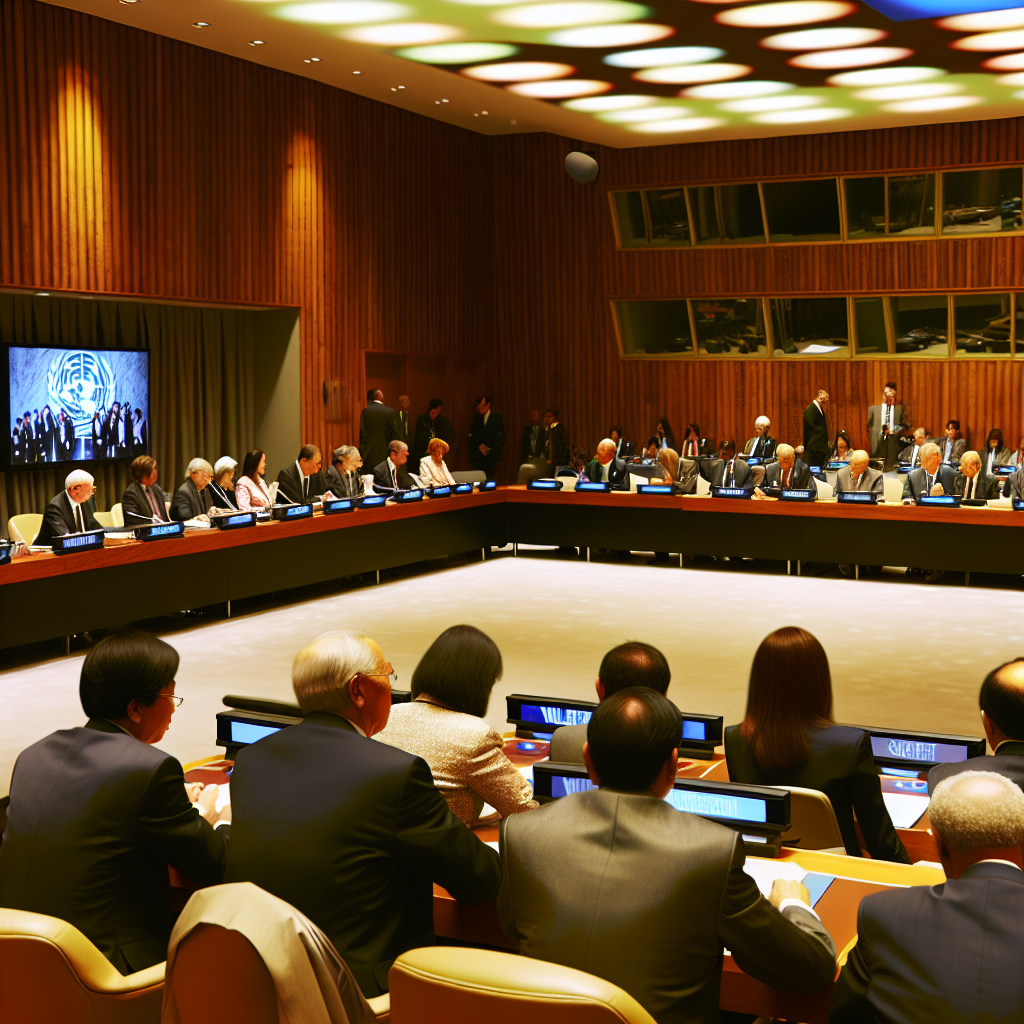
In a pointed address to the United Nations Security Council, Finnish Foreign Minister Elina Valtonen didn’t hold back in her criticism of Russia, accusing the nation of breaching the UN Charter and disregarding the ten fundamental principles outlined in the Helsinki Final Act. Speaking in her capacity as Chair-in-Office of the Organization for Security and Co-operation in Europe (OSCE), Valtonen laid bare the growing tensions emanating from the ongoing conflict in Ukraine.
Her remarks, delivered from the bustling floor of the Council in New York City, highlighted the critical juncture at which both regional and international stability now stands. “The way this conflict concludes will resonate far beyond Ukraine,” Valtonen warned, underscoring the potential implications for global adherence to international law—particularly among the permanent members of the UN Security Council, which include the likes of China, France, the UK, the US, and Russia.
The OSCE, an organization with roots tracing back to 1975, emerged from the historic Helsinki Accords—an agreement that played a pivotal role in shaping Cold War dynamics and US-Russian relations. Valtonen emphasized that rather than reimagining Europe’s security framework, it’s essential to uphold existing guarantees. “There’s no need to reinvent the European security order,” she asserted firmly.
As she continued, Valtonen reaffirmed the OSCE’s commitment to holding Russia accountable for its actions, citing poignant examples such as the abduction of Ukrainian children.
Her address echoed the principles laid out during the signing of the Helsinki Accords, which aimed to foster peace and cooperation. With the stakes as high as they are, the international community watches closely, aware that the resolution of the Ukraine crisis could set a precedent for the enforcement of international law in years to come.
To delve deeper into the history that shaped current international relations, listeners can explore Yle News’ podcast episode, which revisits the pivotal events of 1975 and the Conference on Security and Cooperation in Europe, the OSCE’s precursor. Tune in on Yle Areena, Apple, Spotify, or your preferred podcast platform.