

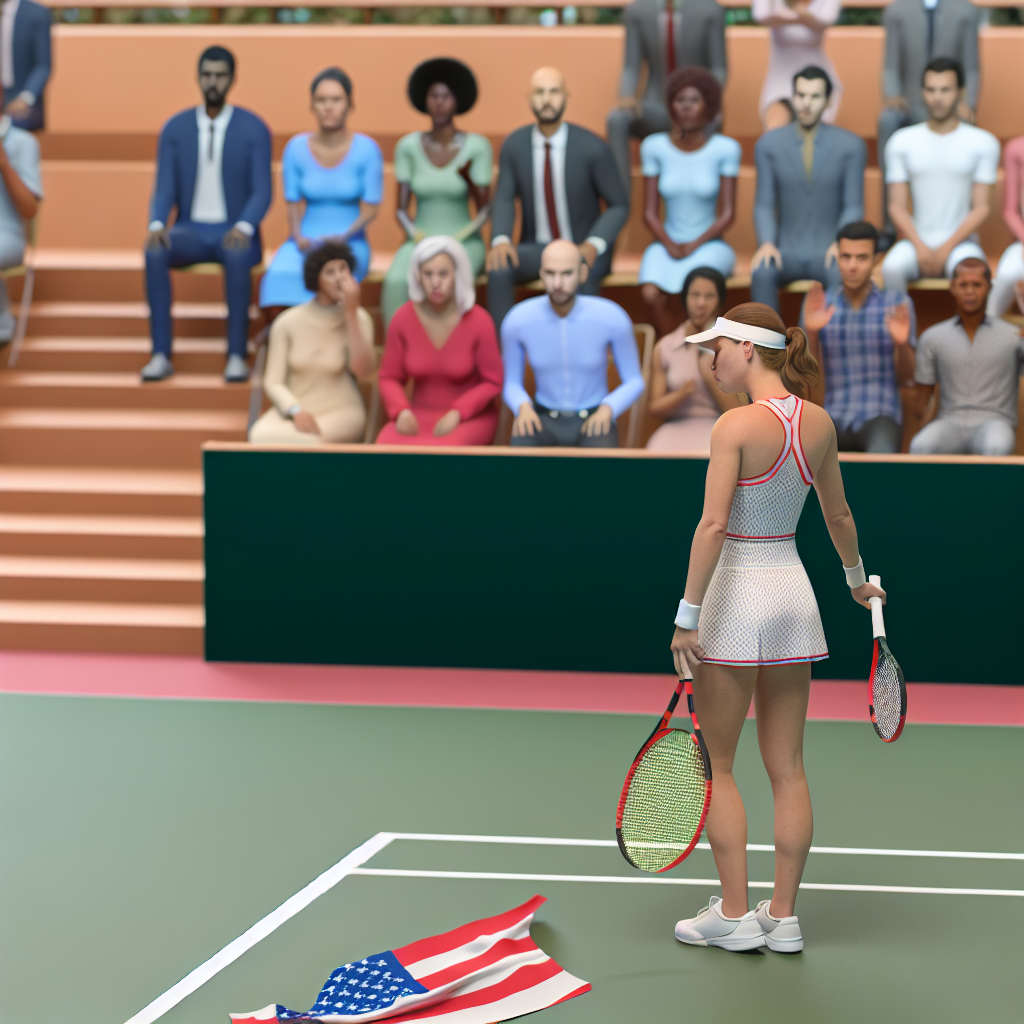
Tennis Star Anastasia Potapova Shifts Allegiance to Austria Amidst Russian Backlash
In a move that has sent ripples through the tennis community, 24-year-old Anastasia Potapova has confirmed her decision to compete under the flag of her “new home,” Austria. This announcement comes on the heels of her successful application for Austrian citizenship, marking a significant change in her professional trajectory.
Born in Russia and long a representative of her homeland, Potapova expressed her deep affection for Austria in a recent statement. “Austria is a place I love. It is incredibly welcoming and a place where I feel completely at home. I have a special connection to Vienna, and I’m really looking forward to establishing my second home there,” she stated with evident enthusiasm.
However, her decision has not been well received back in Russia. Yevgeny Kafelnikov, the Vice President of the Russian Tennis Federation, offered a biting critique: “I don’t relish commenting on this news. Should I even bother having an opinion on it?” Kafelnikov went on to suggest that Potapova’s departure would not impact Russian tennis, remarking, “Was she a strong athlete? What has she ever won for Russia?”
Russian hockey legend and current politician Vyacheslav Fetisov echoed Kafelnikov’s sentiments, questioning Potapova’s significance in the sport: “Is Potapova someone special? He did what he did.”
Potapova, who gained recognition after winning the Wimbledon girls’ tournament in 2016, currently holds the 51st rank in global tennis standings. As she shifts her allegiance, she is not just changing flags; she is also changing her professional team in pursuit of breaking into the top 20 players worldwide.
Adding another layer to this narrative, Potapova is in a relationship with Dutch tennis professional Tallon Griekspoor. The couple recently traveled to Russia for an exhibition tournament, despite the Dutch Ministry of Foreign Affairs urging Griekspoor to reconsider, citing the moral implications of such a visit.
During her time at the tournament, Potapova engaged with the media but did not signal her upcoming switch to representing Austria, keeping her strategic plans close to her chest. Instead, she focused on her future aspirations and preparations for what’s to come.
As Potapova embarks on this new chapter, the response in Russia serves as a reminder of the complex intersections between national loyalty and individual ambition in the world of sports. Whether she will find the anticipated success in Austria remains to be seen, but her journey is certainly one to follow.